If I asked you to name the most effective way to build strength and muscle, you’d probably say something involving moving weight through a full range of motion. And fair enough — that’s exactly what most of us do in the gym.
But there’s another option that tends to get short-changed: isometric training. You know the kind — holding a position without any visible movement at the joint. Planks, wall sits, bar holds.
The conventional wisdom is that isometrics just aren’t as good for building strength and size as dynamic training (one, two, three, four). But I’m not sure that’s fair. The evidence tells a more nuanced story — and much of the problem isn’t with isometrics themselves but how most people apply them.
Here’s what I tell my clients: if you want to know whether isometric training is worth your time, the answer depends on how you do it. The short answer? Done right, isometrics build strength and size just as effectively as dynamic training. Done wrong, they’re just another exercise you hold for 30 seconds while checking your phone.
Let’s dig into what the research actually says.
Muscle Actions: A Quick Refresher
Before we get to isometrics specifically, it helps to know where they sit among the three main types of muscle actions:
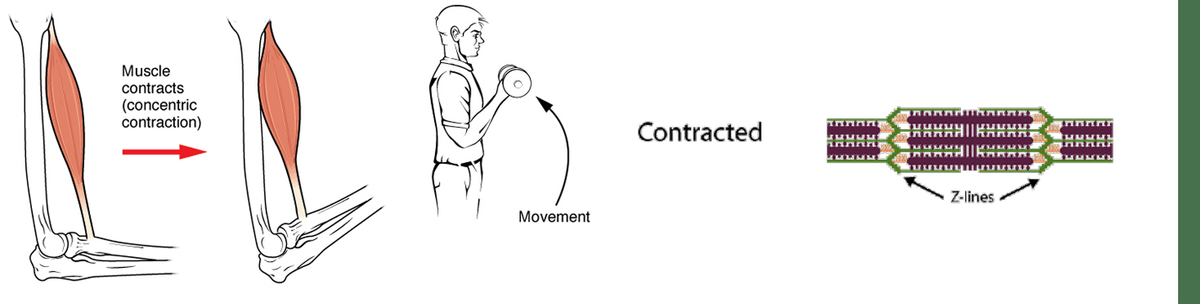
- Isotonic (dynamic): The muscle changes length while producing force. This covers both concentric actions (muscle shortening, like curling a weight up) and eccentric actions (muscle lengthening under load, like lowering the weight). Most gym training is isotonic.
- Isometric: The muscle-tendon complex stays at essentially the same length while producing force. No visible joint movement.
- Isokinetic: Movement occurs at a constant speed, controlled by a machine rather than your effort alone. You’ve probably experienced these in rehab or lab testing.
Prior research suggests that different muscle actions may elicit specific morphological, neuromuscular, and performance adaptations. In terms of maximal force capacity, the order is roughly: eccentric > isometric > concentric.
Two Types of Isometrics That Matter
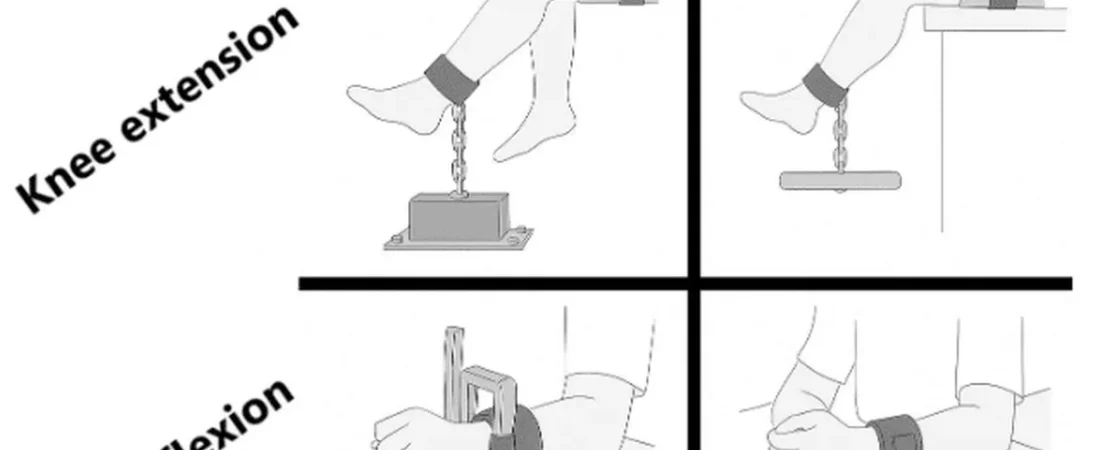
When discussing isometrics, there are two distinct types: pushing (overcoming) and holding (yielding).
Pushing isometrics mean you’re exerting force against an immovable object — trying to move something that won’t budge. Holding isometrics mean you’re maintaining a position while resisting a load that wants to pull you down.
They share some characteristics but differ in others. Research shows pushing isometrics can be sustained for roughly twice as long before task failure compared to holding isometrics at the same relative intensity (1402 vs. 702 seconds, per Hunter and colleagues). Holding isometrics tend to produce greater fluctuations, higher perceived exertion, elevated heart rate, and increased mean arterial pressure.
There’s also a hybrid form called eccentric quasi-isometrics (EQIs), coined by Verkhoshansky and Siff. An EQI starts as a holding isometric — you resist the load at a fixed position until failure — and then transitions into a slow, maximally resisted eccentric phase. The idea is that this adds loaded stretch on top of sustained tension.
To date, only a few studies have explored EQIs in depth. One 8-week study by Henderson and colleagues compared EQIs with traditional resistance training in 22 untrained young men and women. Traditional training produced greater muscle thickness changes (6.7% vs. 4.0%) and larger 1RM gains (19.6% vs. 12.8%). The researchers suggested the EQI group may have lacked adequate progressive overload since they kept loads constant and progressed only by adding sets.
Tendons, Pain, and Rehabilitation
Isometrics are well known for their role in tendon rehabilitation and pain management. Resistance training is considered one of the most important interventions in managing tendinopathy, and isometric training has been suggested as an effective alternative to dynamic training.
Rio and colleagues reported significantly greater acute pain relief following isometric exercise compared to isotonic exercise in participants with patellar tendinopathy — sustained at 45 minutes post-session. However, these findings haven’t been replicated, so take them with a grain of salt. A systematic review by Clifford and colleagues found that isometrics don’t appear to provide greater effects for managing chronic tendinopathy compared to other modalities such as ice therapy or isotonic training.
A 2021 review by Bonello and colleagues reported a lack of clear evidence for exercise-induced hypoalgesia following acute isometric training: out of 13 studies, only 5 found significant effects on pain pressure threshold, mostly in quadriceps exercises.
The practical takeaway? Isometrics are an efficient stimulus during the transition from passive to active rehab. They minimize mechanical stress while allowing controlled force application across the joint. If you’re recovering from injury or dealing with tendon discomfort, starting isometrics at shorter muscle lengths and progressing toward longer ones makes sense — shorter lengths produce less acute muscle damage.
As for tendons themselves, a meta-analysis by Lazarczuk and colleagues found that resistance training placing high strain on the tendons has the largest effect on tendon adaptations, with stiffness being the primary one. Oranchuk and colleagues reported that tendon cross-sectional area and stiffness respond positively to high-intensity isometrics (≥70% MVC), longer contraction durations, and training at long muscle lengths.
Hypertrophy and Strength: The Core Question
Even though most people don’t think of isometrics when planning for hypertrophy, there’s substantial evidence supporting their effect. Six to 14 weeks of isometric training has been shown to produce 5.4–23% increases in muscle cross-sectional area.
Muscle Length Matters
This is probably the most important variable for isometric hypertrophy. A 2019 review by Oranchuk and colleagues found that training at longer muscle lengths produced greater hypertrophy on average (1.16% vs. 0.47%) compared to shorter muscle lengths — though only three studies directly compared them at the time.
More recent work adds nuance. Akagi and colleagues had participants perform 8 weeks of isometric dorsiflexion training either at short or long muscle lengths (3 sets of 8–10 five-second MVCs, three times per week). Both conditions increased muscle thickness and pennation angle, but only the longer-length group showed greater fascicle length changes.
Nakao and colleagues found similar small increases in hamstring CSA across both short and long muscle lengths when training at relatively low intensity (30% MVC). The researchers attributed this to the modest load — suggesting that muscle length effects may be amplified at higher intensities.
Volume and Intensity
The pattern here mirrors what we see with dynamic training. Higher volumes tend to produce greater hypertrophy. Meyers compared low-volume (3 × 6-second contractions) with high-volume (20 × 6-second contractions) at 100% MVC for 6 weeks — the higher volume group showed larger increases in upper arm circumference.
Kanehisa and colleagues compared two equated-volume protocols over 10 weeks: one group did 12 × 6 seconds at 100% MVC, the other did 4 × 30 seconds at 60% MVC. Muscle volume increased more in the 100% MVC group (12.4% vs. 5.3%).
For intensity specifically, training at ≤70% MVC produced 0.77 ± 0.26% hypertrophy per week versus 0.70 ± 0.55% at >70% MVC — essentially similar outcomes when time under tension is equated.
Contraction Duration and Intent
Sustained contractions sometimes outperform short, explosive ones for hypertrophy. Balshaw and colleagues compared sustained (holding 75% MVC for 3 seconds) with explosive (1-second bursts to ~80% MVC) isometrics over the same session structure (4 sets of 10). The sustained group saw larger quadriceps volume gains (8.1% vs. 2.6%) and greater strength increases (23% vs. 17%).
That said, Kubo and colleagues found similar results between rapid non-sustained contractions (~1 second each) and 20-second sustained holds — so the picture isn’t entirely settled.
Rest Intervals
There’s limited direct research here. One study by Waugh and colleagues explored rest periods during heavy isometric plantarflexion: short rests of 3 seconds vs. long rests of 10 seconds between contractions, with 90-second rest between sets. Both conditions produced similar strength and tendon stiffness gains after 12 weeks. The only difference was in collagen organization — it decreased slightly with short rests but was maintained or improved with longer ones.
In practice, most protocols use 2–10 seconds of rest between individual contractions and 60–180 seconds between sets.
Isometrics vs. Dynamic Training: Head to Head
This is the question most readers actually want answered. Across eight studies directly comparing the two, changes in hypertrophy were broadly similar — with two studies slightly favoring isometrics and three favoring dynamic training.
Rasch and Moorehouse (1957) compared 49 active young men over six weeks: isotonic training produced greater arm circumference gains during training (1.22 cm vs. 0.59 cm), but after a six-week detraining period, the isometric group maintained their size better (+0.09 cm vs. –0.60 cm). Net retained gains were essentially equal (~0.6–0.7 cm).
Kubo and colleagues had 10 men perform unilateral knee extension training for 12 weeks — isometrics on one leg, full ROM dynamic on the other. Muscle volume changes slightly favored the dynamic condition (5.6% vs. 4.5%), though differences weren’t statistically significant.
My own team recently published a study comparing isometric training at long muscle lengths with isotonic full range of motion in 23 resistance-trained individuals over six weeks. Both conditions produced similar increases in anterior and lateral quadriceps thickness, which suggests that even when you hold exclusively at the longest muscle length, a full ROM dynamic set still gets you there.
Isometrics vs. Other Muscle Actions
Jones and Rutherford (1987) compared isometric, concentric-only, and eccentric-only training in 12 healthy adults over 12 weeks. Isometric strength gains were significantly larger with isometric training (35%) than with either concentric (15%) or eccentric (11%). Muscle CSA increased similarly across all three groups (4–6%).
Carmichael and colleagues compared isometric vs. eccentric hip extension in 24 recreationally trained men over six weeks. Fascicle length increases were only observed in the eccentric condition, likely because eccentrics were performed at longer muscle lengths on average.
The evidence still isn’t definitive — we’re working with roughly three studies that isolate isometric against concentric or eccentric actions directly. But the pattern suggests muscle length may be a bigger driver of adaptation than which specific muscle action you choose.
Practical Applications: How to Program Isometrics
The research says… but here’s the practical part:
Type of contraction: Use pushing isometrics for strength development (they allow greater force output). Holding isometrics work well for muscular endurance, joint stability, or early-stage rehabilitation.
Muscle length / joint angle: Train at longer muscle lengths when the goal is strength or hypertrophy. This appears to produce slightly greater hypertrophy and broader strength transfer across a range of motion.
Volume: Aim for roughly 80–150 seconds of total contraction time per session for hypertrophy, and 30–90 seconds for maximal strength. That translates to about 10–40-second contractions (hypertrophy) or 1–5-second maximal efforts (strength), typically across 3–5 sets.
Intensity: Moderate-to-high (~50–70% MVC) is sufficient for hypertrophy. For strength, go higher — ~80–100% MVC with shorter contractions of 1–5 seconds.
Intent: Sustained contractions tend to edge out explosive ones for size gains. Short, explosive efforts are better when rate-of-force development is the goal.
Rest intervals: Use ~2–10 seconds between contractions and ~60–180 seconds between sets as a starting point.
Exercise selection: Multi-joint isometric exercises that resemble your target movement transfer better to dynamic performance than single-joint holds. Train at multiple joint angles if you want broader strength gains; train at one specific angle to address a sticking point.
The Science, Simplified
Isometrics build strength and size — the evidence for that is solid. The biggest lever you can pull is muscle length: training at longer lengths tends to produce slightly more hypertrophy and better strength transfer across your range of motion. Volume matters (aim for 80–150 seconds of total contraction time per session), intensity should be moderate-to-high, and sustained holds are a good default if you’re unsure what to do.
Isometrics won’t replace dynamic training entirely. But they’re an extremely useful tool — especially for overcoming sticking points, managing tendon pain during rehab, or adding stimulus when equipment is limited. The research won’t make you strong by itself. The next workout will.
Frequently Asked Questions
Do I need special equipment for isometric training? No. You can perform effective isometrics with a barbell against the rack pins, pushing against a wall, holding a dumbbell at a fixed angle, or even just bracing against a doorframe. Force plates and strain gauges help track progress but aren’t required.
Should I do isometrics before or after my main lifts? Either works. At the start of a session you’re fresh for maximal force production. At the end, they can serve as an advanced technique — push to failure on your dynamic set, then hold at the longest muscle length for an extra 10–20 seconds.
How long before I see results? Most studies report meaningful changes within 6–12 weeks. Some show strength gains appearing as early as week one (~5% per week in the earliest study by Hettinger and Müller, 1953), but consistent hypertrophy typically takes a couple of months.
If you feel sharp pain or something is off, see a qualified professional before continuing.



Leave a Reply