If you’ve ever pushed through a tough set only to realize your mind was the thing holding the bar back, you already know this: emotional resilience is just as trainable as physical strength.
The short answer? Healthy coping mechanisms regulate your nervous system so stress hormones like cortisol don’t stay elevated all day. Over time, that protects both your mood and your body from the wear and tear of chronic stress.
Here’s what I tell my clients: you don’t need a complete lifestyle overhaul to feel steadier. You need small, repeatable practices — the same way progress in the gym comes from consistent training, not occasional hero sets.
Daily Micro-Habits That Anchor Your Nervous System
When your schedule is packed and decision fatigue is real, dramatic changes don’t stick. What does work is predictable micro-habits — tiny routines that give your nervous system steady ground to stand on.
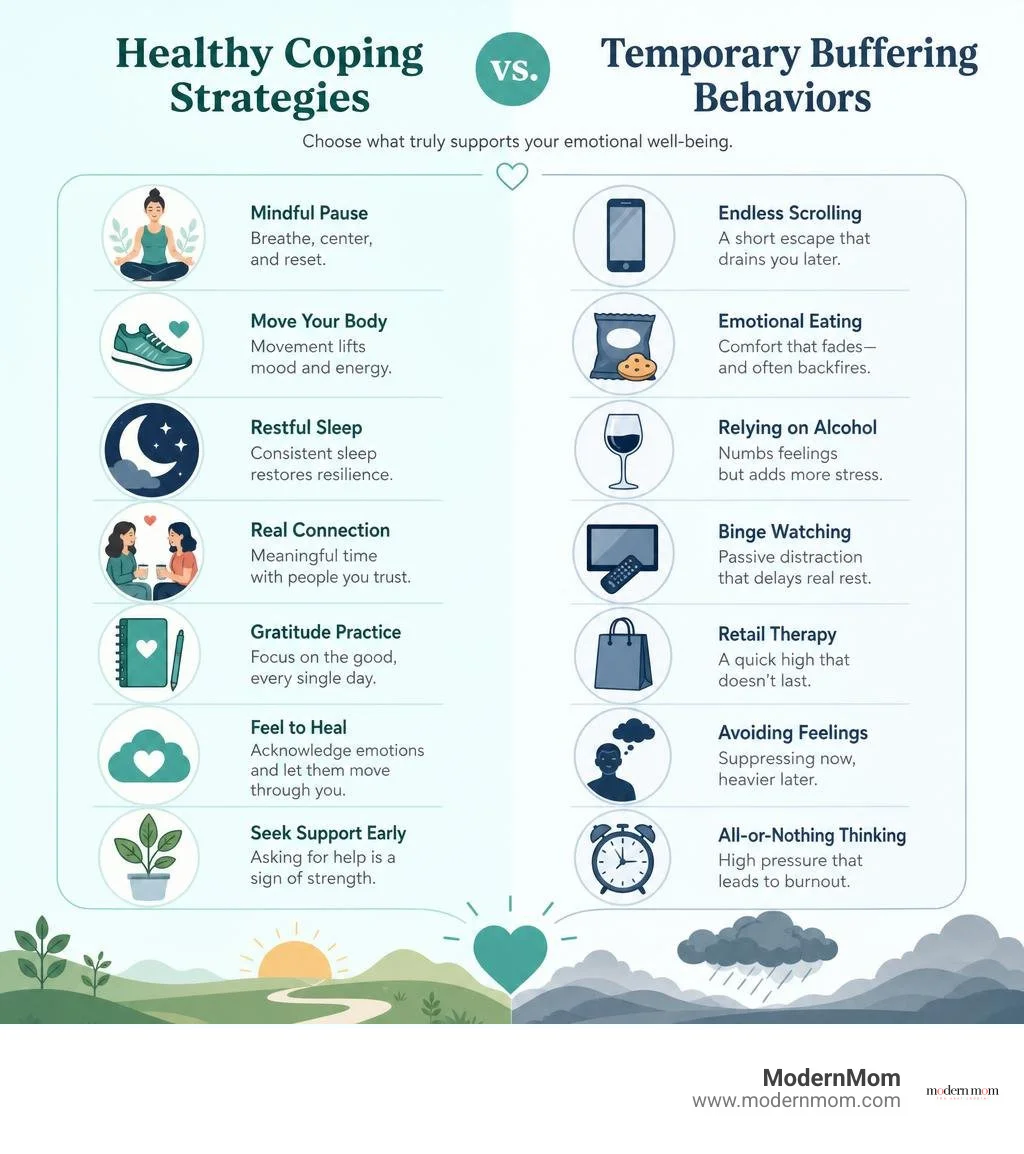
Research on daily habits for emotional well-being shows that consistent small efforts build far greater resilience than sporadic intense ones. When we create gentle structure in our mornings and evenings, our bodies stop running at full alert all day.
The 60-Second Box Breath
Inhale through your nose for 4 seconds, hold for 4 seconds, exhale through your mouth for 4 seconds, and hold for 4 seconds. Repeat this cycle just three times. It calms the nervous system almost instantly.
The 3-2-1 Sensory Reset
Pause and quietly name 3 things you can see, 2 things you can hear, and 1 physical sensation you feel. It pulls your mind right into the present moment.
The Intentional Pause
Before opening a stressful email or walking through the door after errands, take one deep exhale to release tension in your jaw and shoulders. Sound familiar? This is the emotional equivalent of setting up before the lift.
Movement, Sleep, and the Physical Foundation
Your emotional state is deeply tied to your body — no surprise there for anyone who trains. According to guidelines from the NIMH on caring for mental health, daily movement and restful sleep directly regulate mood-boosting brain chemicals and lower cortisol.
Sleep: Adults need 7 or more hours per night. Keep your room cool and dark, and try putting your phone away 30 minutes before bed to reduce light interference.
Movement: Studies show that just 30 minutes of walking a day can elevate mood, boost energy, and improve sleep quality. You don’t need exhausting workouts — low-pressure movement works.
Fuel: Eat regular, balanced meals with plenty of fresh produce, and drink water throughout the day. Dehydration and blood sugar dips often show up as irritability and anxiety before you even realize you’re hungry or thirsty.
Managing Stress Without Buffering
The #1 mistake I see in my clients — and honestly in myself when I first started coaching — is “buffering.” Endless phone scrolling, late-night snacking, bottling up feelings. These tactics offer temporary distraction but don’t solve the underlying overwhelm.
Healthy coping starts with emotional self-awareness. Instead of pushing hard feelings away, acknowledge them without judgment. Name what you’re feeling. Sit with it for a moment. That alone does more work than most people realize.
The Gratitude Practice
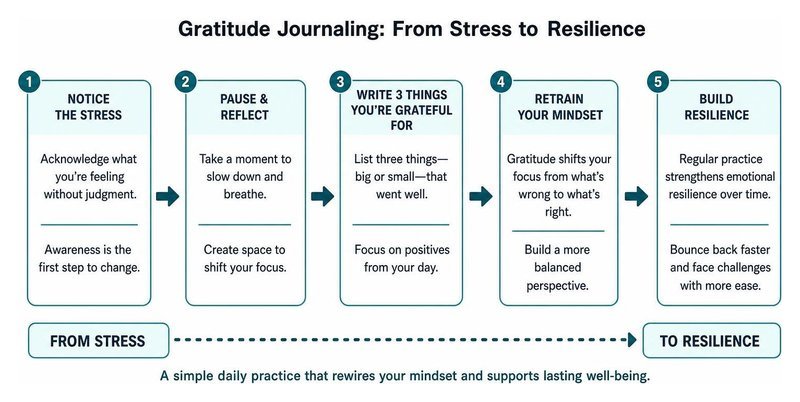
Resilience isn’t about toughing it out — it’s about actively filling your emotional tank so you bounce back faster from daily hiccups. One of the most effective, research-backed ways to reframe difficult moments is practicing gratitude.
Studies show that people who write down three positive things each day for just one month see measurable boosts in happiness and significant drops in depressive symptoms. When we consciously look for bright spots, we retrain our brains to spot solutions rather than dwelling only on problems.
The Perfectionism Trap
Trying to do everything perfectly sets an impossible standard. Research highlighted in a BBC article on science-backed ways to feel better shows that self-compassion — accepting your mistakes with kindness — is key to breaking free from perfectionism.
- Turn off non-essential notifications: The average person checks their phone nearly 186 times a day. Batch alerts or leave your device in another room when focus matters.
- Say “no” more often: Protect your time by declining non-essential commitments when your plate is already full.
- Ditch all-or-nothing thinking: A 5-minute walk or a partially tidied room still counts as progress. Progress over perfection, every time.
Social Connection: The Cushion You Can’t Train Alone
This one is non-negotiable. Human beings are hardwired for connection. This NHS guide on steps to mental well-being emphasizes social connection as a primary pillar of mental health.
Strong relationships act as powerful cushions against life’s pressures. While social media keeps us in touch virtually, meaningful in-person interactions or warm phone chats nourish us on a deeper level.
The research says community matters — but here’s the practical part: you don’t need a big network. A few good people you can actually talk to makes the difference. I’ve seen lifters who trained solo for years completely shift their consistency just by joining a small group class.
When Self-Care Isn’t Enough
Daily habits, movement, sleep — these are all excellent preventive tools. But they don’t replace professional clinical care when emotional challenges become overwhelming.
Public health insights suggest seeking professional guidance if you experience persistent symptoms lasting two weeks or more, including:
- Unrelenting sadness, anxiety, or irritability that interferes with daily tasks
- Significant changes in sleep patterns or appetite
- Difficulty concentrating or feeling constantly detached from loved ones
- Loss of interest in activities you normally enjoy
Start by speaking with your primary care physician, who can connect you with qualified therapists or mental health professionals. If you or someone you know is in suicidal crisis, emotional distress, or needs immediate support, call or text 988 or chat through the 988 Suicide & Crisis Lifeline. It’s available 24/7, free, and confidential.
If you feel something is off physically or emotionally and it isn’t resolving on its own, consult a professional before continuing to push through.
The Science, Simplified
When researchers looked at what separates people who handle stress well from those who don’t, the pattern was clear: it wasn’t about having fewer problems. It was about having consistent practices that regulate the nervous system — sleep, movement, breathing, gratitude, and real human connection. None of these are complicated. All of them add up.
Frequently Asked Questions
How do healthy coping mechanisms directly protect emotional health?
Healthy coping mechanisms regulate your nervous system and prevent prolonged elevations of stress hormones like cortisol. Over time, chronic stress can cause physical issues such as digestive trouble, lowered immunity, and memory problems. Using healthy coping tools helps your body recover from stress quickly, protecting both physical and mental health.
What are quick emotional well-being tips when feeling completely overwhelmed?
Focus on immediate micro-resets:
- Do 60 seconds of box breathing (inhale 4s, hold 4s, exhale 4s, hold 4s).
- Step outside for a 3-minute fresh-air reset to clear your mind.
- Do a 90-second brain dump on paper or a sticky note, then prioritize just one small next step.
How long before small daily habits start showing results?
Many people notice subtle improvements — feeling calmer or less reactive — within just a few days of starting simple habits like box breathing or regular walks. Building lasting resilience takes consistency, though. Sticking with small habits for 3 to 4 weeks helps solidify new neural pathways, shifting your baseline emotional set point toward greater calm and balance.
The research won’t make you resilient by itself. The next tough moment will. Pick one habit from this article — box breathing, a nightly gratitude list, or just 30 minutes of walking — put it in place tonight, and run it for four weeks. Then judge the results. That is the whole secret, and it has always been.



Leave a Reply