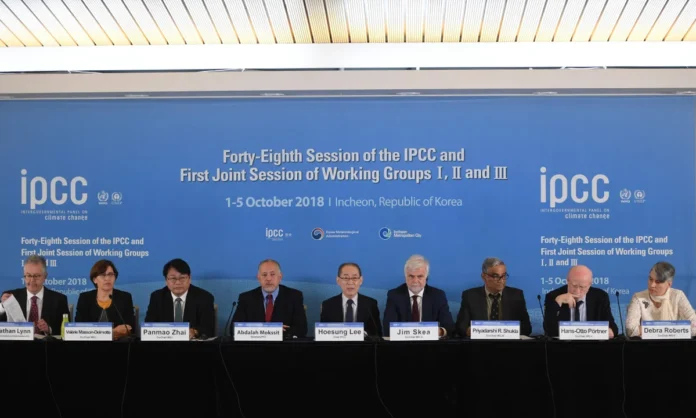
From 27–29 January 2026, an important conversation unfolded inside the London headquarters of the Wellcome Trust. Convened jointly by the Intergovernmental Panel on Climate Change and the Wellcome Trust, the Co-sponsored Expert Meeting on Climate Change and Health gathered nearly 90 leading specialists from around the world. Their shared mission was clear: ensure that human health is assessed more rigorously, coherently, and practically in the IPCC’s Seventh Assessment Report (AR7).
A Timely Gathering
The meeting took place at a pivotal moment in the IPCC assessment cycle. As AR7 takes shape, scientific understanding of climate change continues to evolve—particularly regarding its health consequences. Since the Sixth Assessment Report (AR6), new research has sharpened the picture: rising temperatures intensify heat-related illness, extreme weather disrupts healthcare systems, air pollution compounds chronic disease, and shifting ecosystems alter patterns of infectious disease.
Yet despite these advances, significant evidence gaps remain. Policymakers are increasingly asking not only what is happening to the climate, but how it will affect the health of their populations—and what actions can meaningfully reduce risk. The London meeting created a focused space to confront these questions head-on.
Bridging Climate Science and Health Practice
One of the meeting’s central aims was to identify policy-relevant evidence gaps in climate and health. Participants examined the growing body of research that has emerged since AR6 and asked difficult but necessary questions:
- Where is the science robust and actionable?
- Where are uncertainties most consequential?
- What information do decision-makers need to design health-sensitive climate policies?
The discussion went beyond cataloguing risks. It emphasized usability. For example, how can projections of heatwaves better inform hospital preparedness plans? How can data on air quality and climate interactions guide urban design? What indicators are most meaningful for tracking health outcomes linked to climate stressors?
By focusing on these practical dimensions, the meeting aimed to ensure that AR7 does not simply describe problems, but helps illuminate solutions.
Deepening Collaboration Across Working Groups
Another core objective was strengthening collaboration across the IPCC’s Working Groups. Climate change is multifaceted: physical science underpins it, impacts and adaptation shape its consequences, and mitigation defines pathways forward. Health cuts across all of these domains.
Historically, assessments of climate and health have sometimes been fragmented, reflecting disciplinary boundaries. The London meeting sought to close those gaps. Health experts worked side-by-side with scientists involved in the IPCC’s Working Groups to explore how assessments could be better integrated—scientifically consistent, methodologically aligned, and thematically coherent.
This cross-disciplinary engagement matters. Heat exposure, for example, depends on physical climate projections; vulnerability is shaped by socioeconomic context; and mitigation choices influence air quality and long-term health outcomes. Bringing these strands together strengthens the credibility and usefulness of the final report.
The gathering also enabled direct dialogue between invited experts, report authors, and several members of the IPCC Bureau. That proximity—often rare in global scientific processes—allowed ideas to be tested, refined, and grounded in the realities of report development.
Practical Guidance for AR7
The meeting was not merely conceptual. Participants worked toward delivering concrete recommendations to guide AR7. These included:
- Priority thematic areas for climate and health, ensuring attention to both immediate risks (such as extreme heat and storms) and slower-moving threats (like malnutrition or vector-borne disease expansion).
- Scenarios and indicators that can more effectively capture health outcomes under different climate futures.
- Approaches to evaluating evidence, particularly methods for assessing the robustness of health-related findings across diverse study designs.
- Engagement with diverse knowledge systems, recognizing that lived experience, local expertise, and traditional knowledge provide crucial insight into climate-health interactions.
The emphasis on indicators and scenarios reflects a broader shift toward measurable outcomes. Policymakers often rely on clear benchmarks. By refining how health metrics are integrated into climate scenarios, AR7 can better inform adaptation planning and risk reduction strategies.
Meanwhile, incorporating diverse knowledge systems acknowledges that climate impacts—and responses—are deeply contextual. Vulnerability varies by geography, socioeconomic status, and infrastructure. Integrating multiple perspectives can enhance the equity and inclusiveness of the assessment.
A Collaborative Spirit
Participants described the meeting as highly collaborative. Rather than a series of formal presentations, it functioned as a working forum—an exchange of perspectives, an arena for candid discussion, and a laboratory for practical problem-solving.
In small groups and plenary sessions, experts challenged assumptions, identified blind spots, and explored innovative assessment methods. The tone balanced urgency with optimism: while the health impacts of climate change are serious and growing, there is also expanding capacity to understand and address them.
The atmosphere reflected a recognition that health is one of the most tangible ways people experience climate change. Heat stress, respiratory illness, food insecurity, mental health strain—these are not abstract projections but lived realities. Framing climate change through the lens of health can help bridge scientific analysis and public concern.
Why This Moment Matters
The conversations in London come at a critical juncture. The IPCC’s assessment reports influence global climate negotiations, national policies, and funding priorities. Strengthening the treatment of health within AR7 has the potential to elevate its prominence in climate policy discussions worldwide.
Moreover, health provides a unifying narrative. Protecting people from climate-related harm resonates across political and cultural boundaries. By sharpening the evidence base and clarifying policy implications, AR7 can help decision-makers design strategies that simultaneously address climate risks and improve public well-being.
The Co-sponsored Expert Meeting demonstrated that advancing this agenda requires more than compiling research—it demands collaboration across disciplines, regions, and institutions. It calls for bridging the worlds of climate modeling and clinical practice, epidemiology and infrastructure planning, global assessment and local action.
Looking Ahead
As work on AR7 continues, the insights generated in London are poised to shape how climate-health interactions are assessed and communicated. The meeting’s recommendations will inform ongoing drafting processes, encourage more integrated analysis, and help ensure that health considerations are woven consistently throughout the report.
In doing so, the initiative underscores a broader truth: climate change is not only an environmental or economic challenge—it is a profound public health issue. Addressing it effectively means understanding and articulating its impacts on human well-being with clarity, rigor, and purpose.
The January 2026 gathering at the Wellcome Trust headquarters marked an important step in that direction. By bringing together global expertise at a decisive moment, the IPCC and its partners have helped lay the groundwork for a more comprehensive and actionable assessment of climate change and health in AR7.