
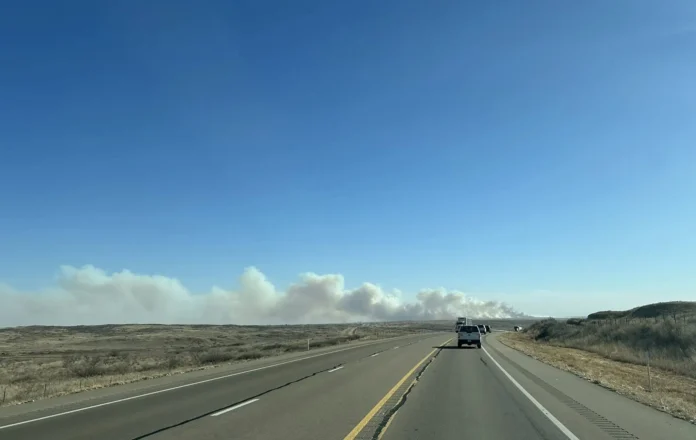
The Texas Panhandle is grappling with one of the most severe wildfire threats in recent memory, prompting state officials to declare an Agriculture Emergency. Texas Agriculture Commissioner Sid Miller made the announcement Wednesday, citing the extensive damage wildfires have caused to farmers and ranchers across the region.
Drought conditions, soaring temperatures, and low humidity have combined to create what the Texas Department of Emergency Management calls “extremely critical” fire danger. Officials warn that these harsh conditions are expected to persist through the end of the week, putting vast swaths of Texas at high risk for further fire activity. The Texas A&M Forest Service has placed the state at Wildfire Preparedness Level 3, signaling significant and frequent wildfire activity that may require support from other regions, agencies, or even neighboring states.
Currently, three major wildfires—the Lavender Fire, 8 Ball Fire, and Canadian Bridge Fire—have collectively burned over 21,350 acres in the Panhandle. Fire crews have recently managed to contain 12 smaller blazes, but the threat remains pressing.
In response to the growing crisis, Commissioner Miller urged Texas farmers and food producers to seek assistance through the State of Texas Agriculture Relief Fund (STAR Fund), which relies on private donations to aid in agriculture disaster recovery. Eligible ranchers and agribusinesses are also encouraged to use the state’s free AgriStress and Hay and Feed hotlines for guidance and support.
“Texans always rise for neighbors in crisis,” Miller said in a statement Wednesday. “Panhandle families are reeling from these fires, but Texas stands united. We are activating every tool to get our agriculture heroes back in action.”
Governor Greg Abbott has similarly ramped up state preparedness, activating wildfire response resources and increasing readiness at the state’s emergency operations center. As part of the response, the Texas Intrastate Fire Mutual Aid System, which brings together more than 250 firefighters from state, local, and out-of-state agencies, has been mobilized. The Texas National Guard has also deployed Blackhawk and Chinook helicopters equipped for firefighting operations.
“Texas stands ready to deploy all necessary resources to thwart any wildfire threats in our state,” Governor Abbott said earlier this week. “I directed the Texas Division of Emergency Management to deploy additional resources in preparation for potential wildfire danger this week. Texans are urged to create an emergency plan, heed the guidance of state and local officials, and limit any activities that could spark fires to keep themselves and loved ones safe.”
The Agriculture Emergency declaration and state-level response come at a critical moment for local farmers and ranchers, many of whom face heavy losses to crops, livestock, and land. Beyond immediate fire suppression efforts, officials emphasize long-term recovery, urging residents to take advantage of available relief programs and support networks.
The Texas Panhandle’s wildfire crisis serves as a stark reminder of the increasing vulnerability of rural communities to climate-driven events. As drought and extreme heat continue to strain the landscape, preparedness, rapid response, and community solidarity are being called upon more than ever. For now, state agencies, volunteers, and emergency responders are working around the clock to protect lives, livelihoods, and the vast stretches of land that define Texas agriculture.