
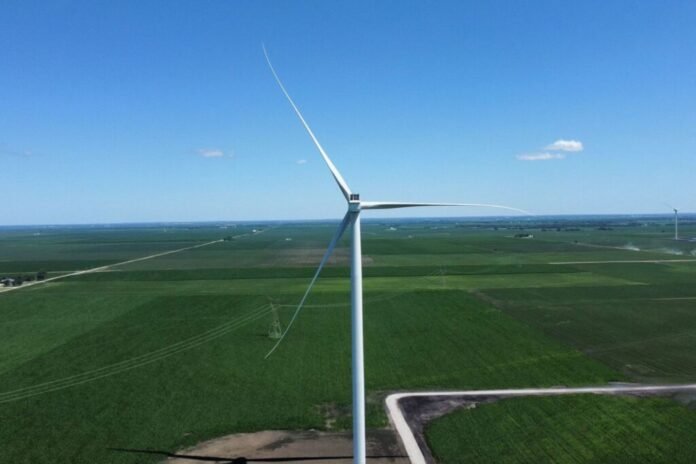
When global energy giant Enel looks at the United States, it doesn’t just see open plains and sun-drenched deserts. It sees momentum — and opportunity measured in billions.
On February 21, the Rome-based power company moved decisively, agreeing to acquire a portfolio of operational U.S. wind and solar projects totaling 830 megawatts (MW). The deal, signed through its subsidiaries Enel Green Power North America and EGPNA Project Holdco 2, transfers the assets from investment firm Excelsior Energy Capital for approximately $1 billion, subject to adjustments. The portfolio’s enterprise value stands closer to $1.3 billion.
For Enel, this isn’t a speculative bet on projects still on the drawing board. These facilities are already generating power, with an expected annual output of roughly 2.1 terawatt-hours (TWh). That’s enough electricity to supply hundreds of thousands of American homes while cutting substantial carbon emissions each year.
Building Scale in a Competitive Market
Once the transaction closes — expected in the third quarter of 2026 — Enel anticipates a positive annual impact of about $145 million on the group’s consolidated ordinary EBITDA. The purchase will also push the company’s U.S. renewable installed capacity to roughly 13 gigawatts (GW), spanning wind, solar, and energy storage.
In a country where energy demand is climbing — driven by electrification trends, population growth, and the explosive expansion of AI-powered data centers — scale matters. Companies with larger, diversified renewable portfolios are better positioned to secure long-term contracts, stabilize earnings, and weather market volatility.
Enel’s latest acquisition reflects a broader strategy: expand renewable generation in stable, investment-grade markets and prioritize assets that are already operational. That approach reduces development risk while delivering immediate cash flow.
A Global Giant With Renewable Ambitions
Enel is hardly new to the clean energy arena. Globally, the group operates about 93 GW of total generation capacity. Its renewables arm, Enel Green Power, accounts for approximately 68 GW of that total. The portfolio spans wind farms, solar parks, geothermal facilities, hydroelectric plants, and energy storage systems across Europe, the Americas, Africa, Asia, and Oceania.
By reinforcing its U.S. footprint, Enel is doubling down on one of the world’s most dynamic energy markets. Federal incentives, state-level clean energy mandates, and corporate sustainability commitments continue to drive demand for renewable power purchase agreements.
The acquisition aligns neatly with Enel’s broader corporate roadmap. The company has outlined an ambitious investment plan through 2028, with roughly €53 billion allocated across its operations. About half of that — approximately €31 billion — will go toward modernizing and expanding power grids. Spain alone, where Enel operates through its subsidiary Endesa, will receive about 21% of those grid investments.
Strengthening transmission networks is critical. Renewable energy expansion depends not only on generation capacity but also on reliable infrastructure to deliver power where it’s needed. Modern grids enable higher renewable penetration, better storage integration, and improved system resilience.
The U.S. Power Sector’s New Chapter
Enel’s billion-dollar move comes amid a wave of consolidation and repositioning across the U.S. energy landscape. Large-scale transactions are reshaping the competitive environment as companies pursue reliability, scale, and financial resilience.
For example, Constellation Energy recently announced a $29 billion acquisition of Calpine, while NRG Energy agreed to purchase LS Power for $12.5 billion. These deals reflect a sector preparing for surging electricity demand and rising capital requirements.
After several years of relatively cautious dealmaking, 2025 marked a turning point. The rapid growth of artificial intelligence applications and energy-hungry data centers has altered long-term planning assumptions. Power providers are now racing to secure dependable generation assets and grid capacity to meet anticipated demand.
Renewables, once viewed as supplementary, are now central to the equation. Wind, solar, and battery storage offer scalability and declining costs, making them increasingly competitive with conventional generation. For multinational players like Enel, acquiring established renewable assets is both a growth play and a hedge against regulatory and market uncertainty.
Financial Discipline Meets Clean Energy Growth
Notably, Enel plans to finance the U.S. acquisition through cash flow from current operations rather than new debt issuance. This detail underscores the company’s emphasis on financial discipline. As interest rates and capital costs fluctuate, maintaining a strong balance sheet is essential.
Investors responded favorably to Enel’s broader investment announcements. Following the unveiling of its new strategy, the company’s stock experienced its largest surge in nearly four years. Markets appear to be rewarding a clear focus on renewables, grid modernization, and operational efficiency.
The strategy also reflects a balancing act: expanding renewable capacity while reinforcing regulated grid businesses that provide steady returns. Together, these pillars aim to create long-term earnings stability in an increasingly electrified world.
A Signal of Confidence
At its core, Enel’s billion-dollar U.S. investment is a vote of confidence — in renewable energy economics, in American market fundamentals, and in the accelerating shift toward low-carbon power.
With operational assets, predictable output, and immediate financial contribution, the acquisition strengthens Enel’s position in one of its key growth markets. It also signals that the era of incremental renewable additions may be giving way to larger, more decisive moves.
As electricity demand climbs and the global energy transition gathers pace, companies that combine scale, infrastructure investment, and financial prudence are likely to shape the next chapter of the power industry. Enel’s latest deal suggests it intends to be firmly in that group — and that the U.S. will remain central to its clean energy ambitions.