
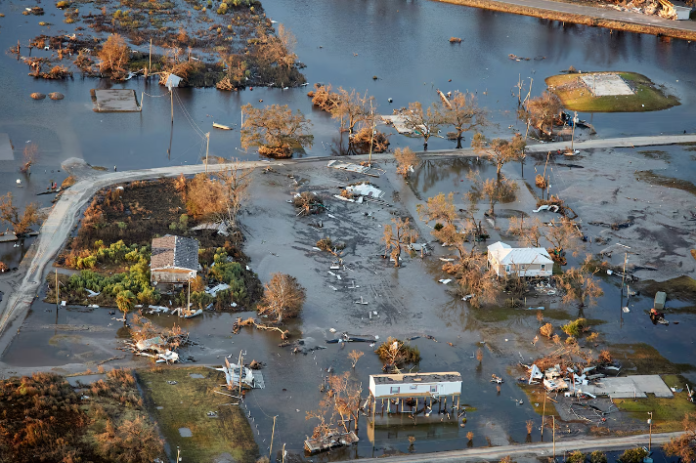
Hurricanes are among Earth’s most formidable natural forces, blending relentless winds with torrential rain. These storms can wreak havoc when they reach land—winds can topple structures and even spawn tornadoes—but it’s often the flooding that poses the deadliest threat. With climate change warming oceans and altering weather patterns, hurricanes are becoming faster, wetter, and more destructive. Understanding how they form and why they are intensifying is critical to preparing for them.
How Hurricanes Form
The term “hurricane” has roots in the Indigenous Caribbean word hurakan, which referred to the powerful spirits and forces that early European explorers believed drove the region’s storms. Today, we know that hurricanes are massive heat engines, powered by warm ocean waters.
Hurricanes begin as tropical disturbances over oceans with surface temperatures of at least 80°F (27°C). These low-pressure systems draw energy from the warm, moist air above the water. If winds remain below 39 miles per hour, the system is classified as a tropical depression. Once sustained winds reach 39 miles per hour, it becomes a tropical storm—and is given a name following conventions set by the World Meteorological Organization. Winds of 74 miles per hour or higher transform a storm into a hurricane, categorized on the Saffir-Simpson scale from 1 to 5, based on intensity.
Interestingly, the same phenomenon goes by different names worldwide: “hurricanes” in the North Atlantic and eastern Pacific, “typhoons” in the Northwest Pacific, and “cyclones” in the South Pacific and Indian Ocean.
At the storm’s core is the “eye,” a calm, circular center roughly 20 to 40 miles wide. Surrounding it is the eye wall, where the strongest winds and heaviest rains occur. The storm spins in a characteristic rotation due to the Coriolis effect, fueled by the energy released as water vapor condenses in towering thunderstorms.
Why Hurricanes Are So Dangerous
Hurricanes pose multiple threats when they strike land. Storm surges—walls of ocean water driven ashore by hurricane winds—can reach 20 feet (6 meters) and penetrate miles inland. Torrential rain can trigger catastrophic flooding and landslides, even far from the coast. In fact, flooding and storm surge are responsible for roughly three-quarters of deaths from Atlantic tropical cyclones.
Historical storms underscore the destructive potential. Hurricane Katrina, which hit Louisiana in 2005, caused 1,200 deaths, a third of which were from drowning. Katrina also remains the costliest hurricane on record, with damages totaling $125 billion. In the Pacific, where storms have more room to intensify before landfall, hurricanes can reach astonishing strength. Hurricane Patricia in 2015, off the coast of Guatemala, recorded winds of 215 miles per hour, the highest ever documented.
Beyond wind and water, hurricanes can spawn tornadoes, further increasing their destructive reach. And while the eye may seem deceptively calm, the surrounding wall of wind and rain packs the most ferocious punch.
The Role of Climate Change
Recent research indicates that climate change is altering hurricane behavior, making storms stronger, wetter, and slower-moving. Warmer ocean temperatures provide more energy, and a warmer atmosphere can hold more moisture, increasing rainfall potential. Hurricane Harvey, for example, dumped a record-breaking 51.8 inches of rain on southeastern Texas in 2017, fueled by Gulf of Mexico waters that were 2°F warmer than decades earlier.
Climate shifts may also influence hurricane tracks. In the Atlantic, Arctic warming could push storms farther west, increasing the likelihood of U.S. landfalls. Slower-moving storms exacerbate damage, as prolonged exposure to high winds and rainfall raises the risk of catastrophic flooding and extended storm surges.
The number of extreme storms in recent years highlights the trend: the 2018 hurricane season produced 22 major hurricanes in just three months, while 2020 saw 30 named storms, 14 of which became hurricanes, seven intensifying further into major hurricanes. Scientists warn that these trends make accurate forecasting and preparedness more vital than ever.
Forecasting and Preparedness
The best defense against hurricanes is early warning. Meteorological agencies, such as the National Hurricane Center, issue hurricane watches when storms are possible within 48 hours and warnings when impacts are expected within 36 hours. These forecasts give communities crucial time to evacuate, secure property, and prepare for flooding.
Preparedness also involves understanding local risks, from potential storm surge zones to inland flood-prone areas. While we cannot prevent hurricanes, accurate tracking and planning can save lives and reduce property damage.
Facing the Future
Hurricanes remind us of nature’s raw power and our vulnerability to it. With climate change likely to make storms more intense and destructive, understanding their mechanics, tracking them closely, and taking proactive measures to reduce risk are more critical than ever. Scientists emphasize that addressing the underlying causes of climate change is key to mitigating the growing threat of supercharged storms in the decades to come.