From December 1 to 5, 2025, the quiet winter streets of Saint-Denis became the meeting ground for one of the most significant scientific collaborations in the world. More than six hundred leading climate experts convened just outside Paris for the Joint First Lead Author Meeting of Working Groups I, II and III of the Intergovernmental Panel on Climate Change (IPCC). Their shared mission: to begin drafting the Seventh Assessment Report, widely known as AR7.
This marked the first time authors from all three Working Groups gathered together at the very start of an assessment cycle. The decision to hold a joint meeting was deliberate and symbolic. Climate change is no longer a challenge that fits neatly into scientific silos. Its causes, impacts, and solutions are deeply intertwined. By bringing together experts in climate science, impacts and adaptation, and mitigation strategies under one roof, the IPCC signaled its intention to approach AR7 with a more integrated and ambitious perspective.
A Global Effort Takes Shape
The IPCC’s assessment reports are among the most influential scientific documents in the world. They inform international negotiations, guide national policies, and shape public understanding of climate risks. AR7 continues this tradition, building on decades of research to provide policymakers with the most comprehensive evaluation of climate science available.
In Saint-Denis, authors representing more than 100 countries began transforming thousands of peer-reviewed studies into the structured outline of AR7. Working Group I focuses on the physical science basis of climate change—how and why the climate system is evolving. Working Group II examines impacts, vulnerability, and adaptation, exploring how climate change affects ecosystems and societies. Working Group III addresses mitigation, assessing pathways to reduce greenhouse gas emissions and limit future warming.
Though each group has its own mandate, the joint meeting emphasized shared themes: the accelerating pace of change, the unequal distribution of impacts, and the narrowing window for effective action. Cross-cutting discussions were central to the week’s agenda, ensuring that insights from one Working Group would inform and enrich the work of the others.
Hosted with Purpose
The meeting was hosted by the French Government, reflecting France’s longstanding engagement in global climate diplomacy. Several ministries collaborated in organizing the event, including those responsible for ecological transition, education and research, and foreign affairs. Their joint involvement underscored the multifaceted nature of climate policy, which spans science, governance, international cooperation, and economic transformation.
The opening ceremony set a tone of urgency and collaboration. Participants were welcomed by Monique Barbut, France’s Minister of Ecological Transition, Biodiversity and International Negotiations on Climate and Nature, who emphasized the importance of science-based decision-making in an era of increasing climate risks. Saint-Denis Mayor Mathieu Hanotin greeted the international delegation, highlighting the role of cities and local governments in climate action.
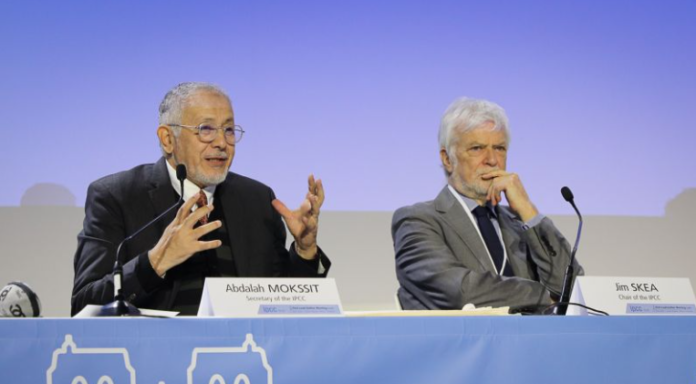
At the global level, IPCC leadership reaffirmed the organization’s commitment to rigorous, transparent, and policy-relevant science. IPCC Chair Jim Skea addressed the authors, reminding them that their work would shape discussions in parliaments, ministries, and communities worldwide. IPCC Secretary Abdalah Mokssit echoed this sentiment, stressing that the credibility of the report rests on the integrity and dedication of its contributors.
Midway through the week, the authors were welcomed at a special event at the Quai d’Orsay by Jean-Noël Barrot, France’s Minister for Europe and Foreign Affairs. The reception symbolized the strong link between climate science and international diplomacy. Scientific findings do not remain on paper; they influence negotiations, agreements, and national commitments.
An Ambitious Leap Forward
What distinguishes this first joint meeting is not only its scale but its ambition. Previous assessment cycles have demonstrated the value of interdisciplinary collaboration, yet AR7 seeks to go further. The climate crisis is increasingly understood as a systemic issue—interacting with biodiversity loss, food security, water resources, public health, and economic stability.
By gathering all three Working Groups at the outset, the IPCC aims to foster deeper dialogue on these intersections. For example, mitigation strategies discussed by Working Group III must consider the vulnerabilities assessed by Working Group II. Likewise, projections from Working Group I provide the scientific foundation for both adaptation and mitigation planning.
The week in Saint-Denis was therefore less about final conclusions and more about setting direction. Authors discussed chapter outlines, clarified key questions, and identified emerging research areas. They debated terminology, examined uncertainties, and began weaving individual expertise into a cohesive global narrative.
Science in Service of Society
The Seventh Assessment Report will not be released overnight. Drafting, reviewing, and revising the document will take several years and involve thousands of expert reviewers and government representatives. Yet the groundwork laid during this first meeting is crucial. It establishes the structure, priorities, and collaborative spirit that will guide the entire process.
For the general public, events like this may seem distant from daily life. However, the findings of AR7 will influence energy policies, urban planning decisions, agricultural strategies, and disaster preparedness plans around the world. From coastal communities facing rising seas to farmers coping with shifting rainfall patterns, the ripple effects of the IPCC’s work are far-reaching.
As the meeting concluded on December 5, participants left Saint-Denis carrying draft outlines, notes, and a renewed sense of responsibility. The challenges ahead are immense, but so too is the collective expertise assembled under the IPCC’s banner.
In the end, the Joint First Lead Author Meeting was more than a scientific workshop. It was a reminder that confronting climate change requires cooperation across borders, disciplines, and institutions. The journey toward AR7 has begun, shaped by the shared determination of hundreds of scientists committed to clarifying one of the defining issues of our time.