
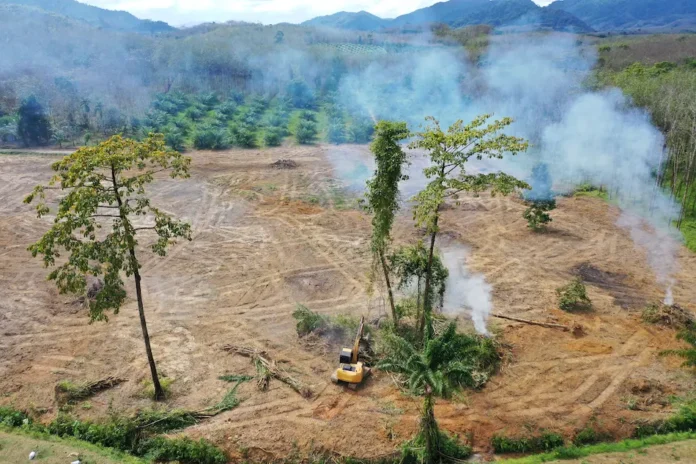
For decades, palm oil has quietly become one of the most ubiquitous ingredients on Earth. It’s in the soap by your sink, the chocolate in your pantry, the lotion on your nightstand, and even the frozen meals in your freezer. Its versatility and productivity have made it indispensable to global supply chains. But behind its convenience lies a complicated environmental and social story.
Now, two lesser-known tree oils — macauba and pongamia — are emerging as potential alternatives. Grown with regenerative practices, they could offer a way to produce high-yield vegetable oils without repeating palm oil’s destructive legacy. The question is whether they can scale responsibly.
The Palm Oil Paradox
Palm oil accounts for roughly 40 percent of the world’s vegetable oil supply. Its dominance is largely due to its efficiency: oil palm trees can produce around 3.3 tons of oil per hectare per year — significantly more than soybean, sunflower, or rapeseed crops. That high yield has made it a go-to ingredient for manufacturers seeking affordability and stability.
But the environmental cost has been staggering.
About 85 percent of global palm oil production comes from Malaysia and Indonesia, where vast tropical rainforests have been cleared to make way for monoculture plantations. These forests are among the most biodiverse ecosystems on the planet, home to endangered wildlife and critical carbon sinks. Their destruction releases massive amounts of greenhouse gases and disrupts fragile habitats.
Beyond deforestation, peatland drainage has increased fire risk, leading to recurring haze and air pollution crises across Southeast Asia. Labor concerns have also plagued the industry, with reports of exploitative conditions and low wages.
Efforts to reform the sector led to the creation of the Roundtable on Sustainable Palm Oil (RSPO), a certification initiative intended to promote responsible production. However, critics argue that weak enforcement and inconsistent standards have allowed environmental harm to continue under the banner of “sustainability.” For some advocacy groups, certified palm oil has become synonymous with greenwashing.
Given these challenges, researchers and agricultural innovators have been exploring alternatives that don’t depend on clearing pristine rainforest.
Macauba: A Palm With a Different Promise
Macauba is a palm tree native to Brazil, particularly abundant in the Cerrado — a vast tropical savanna that covers more than 20 percent of the country. Often overshadowed by the Amazon rainforest, the Cerrado is a biodiversity hotspot in its own right, home to roughly 5 percent of the world’s plant and animal species.
Unlike oil palm, macauba has a remarkable ability to thrive in degraded, dry, and rocky soils. Its deep root system helps stabilize soil, retain water, and store carbon. In regions where land has already been overgrazed or exhausted by intensive agriculture, macauba can play a restorative role.
From a productivity standpoint, macauba is competitive. Research suggests it can yield between 2.5 and 5 tons of oil per hectare annually — in some cases approaching oil palm’s output and dramatically outperforming soy. That efficiency makes it attractive not just for food applications, but also for biofuels and industrial uses.
What truly differentiates macauba, however, is how it can be cultivated. Rather than relying on monocultures, companies are experimenting with agroforestry systems — planting macauba alongside other crops to create diversified landscapes. This approach supports soil regeneration, biodiversity, and local livelihoods.
One company pursuing this model is Soleum, which focuses on restoring degraded land rather than clearing new ecosystems. By integrating macauba into mixed farming systems and converting biomass into biofertilizers and other byproducts, the company aims for a zero-waste, regenerative cycle.
The caveat? The Cerrado itself is under pressure from soy, cattle, and other agricultural expansion. If macauba were to scale irresponsibly, it could repeat the same mistakes seen in palm oil production. Sustainability depends less on the crop itself and more on how — and where — it is grown.
Pongamia: A Legume With Oil Potential
Another tree gaining attention is pongamia, a legume native to Indonesia and parts of the Pacific. Its seeds contain up to 40 percent oil, often marketed commercially as ponova oil.
Pongamia has long been studied for biofuel applications, but its potential in food and personal care products is now being explored. Its resilience is one of its greatest strengths: the tree tolerates drought, poor drainage, saline soils, and pH imbalances — conditions that would challenge many commercial crops.
Because of this adaptability, pongamia can also be used to rehabilitate degraded land. Rather than displacing forests, it can grow on marginal lands that are unsuitable for conventional agriculture.
A partnership between Terviva and Ciranda is helping introduce pongamia oil into food markets. Early adopters include brands like Aloha, which uses ponova oil in select products.
As with macauba, pongamia’s promise lies not only in its yield but in its regenerative potential. The trees fix nitrogen in the soil — a natural benefit of legumes — reducing the need for synthetic fertilizers and supporting healthier ecosystems.
Can These Alternatives Truly Scale?
The global appetite for vegetable oil is enormous. Replacing even a fraction of palm oil requires crops that are productive, economically viable, and environmentally sound.
Macauba and pongamia both show encouraging signs. They can grow on degraded land, tolerate harsh conditions, and produce significant oil yields. When cultivated through regenerative agriculture — emphasizing soil health, biodiversity, and circular resource use — they could help shift the narrative from extractive farming to restorative systems.
However, history offers a cautionary tale. Palm oil was once celebrated for its efficiency and versatility, too. Without strong governance, transparent supply chains, and a commitment to protecting natural ecosystems, even promising crops can become drivers of environmental harm.
The future of vegetable oil may not hinge on a single replacement, but on diversification and better land stewardship. If companies, policymakers, and consumers prioritize regenerative practices over short-term profit, macauba and pongamia could become part of a more sustainable chapter in global agriculture.
Whether they fulfill that promise will depend not just on their biology, but on our choices.