
As the world welcomed the Lunar New Year, marking 2026 as the Year of the Fire Horse—a symbol of vitality, energy, and forward momentum—it’s worth pausing to reflect on stories that remind us of nature’s enduring resilience. While the pace of modern life can be relentless, recent conservation successes show that ecosystems and species can recover when humans commit to protecting them. From species rebounding from near-extinction to a decline in wildlife crime, 2025 offered some of the most uplifting examples of environmental recovery.
From Endangered to Recovering
The International Union for Conservation of Nature (IUCN), the leading authority on the natural world, maintains the Red List of Threatened Species, a global inventory that ranks plants, animals, and fungi from “least concern” to “extinct.” In its latest release, the IUCN celebrated 20 species that were downlisted, signaling a reduction in their risk of extinction.
Among the most notable is the green sea turtle, now classified as “least concern.” After facing a drastic population drop of 48-67% in the late 20th century due to climate change, pollution, fishing, and illegal trade, conservation efforts have helped their numbers recover by roughly 28% compared to the 1970s and 1980s. Roderic Mast, Co-Chair of the IUCN Species Survival Commission Marine Turtle Specialist Group, calls this rebound “a powerful example of what coordinated global conservation over decades can achieve.”
Birds have also seen remarkable recoveries. Twelve species, including the Rodrigues fody and Rodrigues warbler from Mauritius, have increased in population, while Alexandrine parakeets—once transported across continents by Alexander the Great—have seen a 90% growth in their numbers. Other species, from certain snails and seabream to the nocturnal Shark Bay bandicoot, have also moved off the brink.
Rediscovering Lost Species
2025 brought surprising sightings of species once thought to be gone from their habitats. In Papua New Guinea, local fishers led researchers to the sailback houndshark, unseen since 1970. Such rediscoveries underscore the importance of combining scientific research with local knowledge.
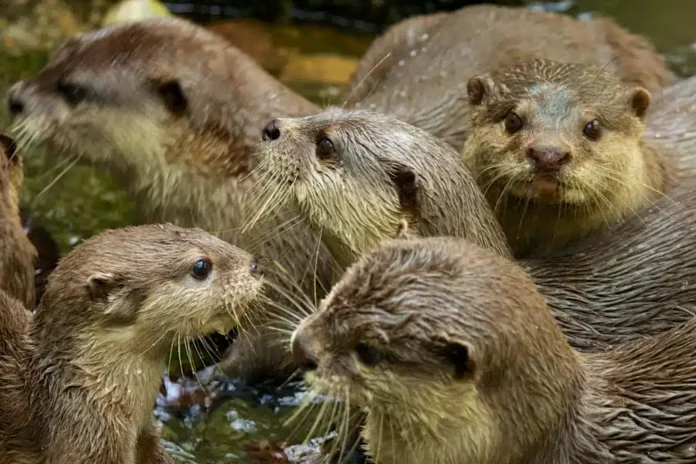
Nepal offered a historic moment when the Asian small-clawed otter—the world’s smallest otter—was recorded for the first time in 185 years. Though vulnerable globally, this sighting provided rare confirmation of its persistence in the region. Similarly, South Africa’s Eastern Cape witnessed wild Cape vultures returning to a farm after three decades, a positive sign for a species endemic to the country and steadily declining since the 1980s. Kerri Wolter, CEO of Vulpro, emphasized that such sightings validate conservation work and motivate continued efforts.
Rewilding: Bringing Wildlife Home
The reintroduction of species to their native habitats has produced some of the most compelling conservation stories. Przewalski’s horses, extinct in the wild since the 1960s and descended from just 13 zoo-bred individuals, are now being reintroduced in China, Mongolia, Kazakhstan, and even Spain. These efforts not only preserve biodiversity but also help restore ecological functions, such as grazing patterns that reduce wildfire risks.
In the UK, the European wildcat is making a comeback. Once declared functionally extinct in Scotland, the species now thrives in the Cairngorms National Park, with kittens born in the wild in both 2024 and 2025. Similarly, pine martens are being reintroduced in parts of England after centuries of decline, signaling hope for the restoration of woodland ecosystems. Helen Senn, Project Lead at Saving Wildcats, describes these milestones as proof that carefully planned interventions can revive species and habitats.
Declining Wildlife Crime
Conservation wins extend beyond habitat and species recovery; trends in illegal wildlife trade show promise. Poaching of African white rhinos has decreased to the lowest levels since 2011, while Assam in India reported zero poaching of one-horned rhinos in 2025. Grethel Aguilar, IUCN Director General, attributes these successes to “intelligence-led enforcement, community engagement, and secure habitats.”
Internationally, trafficking of pangolin scales and ivory has dropped, partly due to pandemic-related disruptions. Prices for pangolin scales fell by around 70% between 2017 and 2021, and ivory prices have steadily declined since 2013, signaling weaker demand. Meanwhile, community-led patrols in the Brazilian Amazon reduced environmental crimes by 80%, demonstrating that empowering local communities is often more effective than top-down enforcement.
A Reason for Hope
These conservation stories remind us that recovery is possible, even for species and ecosystems once considered lost. Progress is rarely immediate or predictable; it often emerges quietly—a sighting of an otter, the birth of wild kittens, or the return of grazing horses. Yet these victories are powerful: they illustrate the impact of sustained human effort, the importance of local knowledge, and the resilience inherent in nature.
At a time when environmental challenges can feel overwhelming, these examples offer a glimmer of optimism. They prove that when people act collectively and consistently, even fragile ecosystems can bounce back, revealing that hope is not just a feeling—it is a tangible, measurable force in conservation.