
Nature-based Solutions (NbS)—from reforestation and wetland restoration to urban greening—have become central strategies in the fight against climate change. They promise not only environmental benefits but also opportunities to strengthen communities, enhance resilience, and support biodiversity. Yet, the full potential of these initiatives is only realized when justice is placed at the heart of planning and implementation.
Earlier this month, an inspiring gathering took place in Addis Ababa, bringing together practitioners from across East and Southern Africa—including Ethiopia, Kenya, Rwanda, Tanzania, Mozambique, Malawi, Zambia, and Namibia—to examine NbS in depth. The focus was not just on ecological outcomes, but on how these projects can contribute to equitable, inclusive, and sustainable transitions—what many refer to as Just Transitions.
Why Justice Matters in Nature-Based Solutions
NbS are often framed as “win-win” solutions, capable of benefiting both people and the planet simultaneously. But in practice, these benefits are far from automatic. Without deliberate attention to equity and justice, NbS can inadvertently reinforce existing inequalities. Historical marginalization, uneven land tenure, power dynamics, and the distribution of funding all shape who benefits from—or is disadvantaged by—these projects.
During the Addis Ababa workshop, participants shared real-world examples illustrating these challenges. Urban hillside and river restoration projects, for instance, sometimes resulted in the displacement of informal settlers. Conservation efforts, while protecting biodiversity, occasionally restricted local access to essential resources like firewood or wild game, triggering new conflicts between communities and wildlife.
These stories sparked rich discussions about the nature of justice in environmental planning. One particularly challenging question emerged: should people engaged in informal or illegal activities—such as unregulated settlements or hunting—be treated equally in planning the impacts of NbS? Exploring this question required participants to consider the underlying causes of these behaviors, the trade-offs policymakers face when resources are limited, and the ways in which Just Transitions can address structural inequalities over the long term.
Designing NbS with Justice in Mind
Despite the complexities, the workshop also highlighted many inspiring examples of NbS that successfully integrate justice. Urban greening initiatives, for example, created stable employment opportunities and revitalized local neighborhoods. Reforestation projects were designed to diversify income streams, ensuring that environmental restoration also supported economic resilience. Community-led nature conservancies demonstrated how traditional approaches to managing human-wildlife conflict can protect both biodiversity and livelihoods.
These cases illustrate a crucial point: NbS are not just about ecosystems—they are about people. Projects that consider equity, inclusion, and empowerment from the outset tend to produce outcomes that are more sustainable and transformative.
Closing the “Final 2%” Gap
A recurring insight from the Masterclass was the idea of the “final 2% gap.” Many NbS projects achieve benefits for the vast majority of participants, yet a small fraction of people can be overlooked. One participant framed it perfectly: Just Transitions are about ensuring that the last 2%—the most vulnerable or marginalized—are not left behind.
Bringing justice into NbS planning does not necessarily require complex frameworks. Often, it is a matter of asking a few key questions:
- What positive and negative impacts will this project or policy have?
- Who will be affected, and in what ways?
- How can negative impacts be managed or mitigated?
- How do we ensure that all voices, especially those historically excluded, are heard in the planning process?
Integrating these considerations from the outset can shift the design of NbS from being well-intentioned to truly equitable and inclusive.
Learning by Doing: A Hands-On Approach
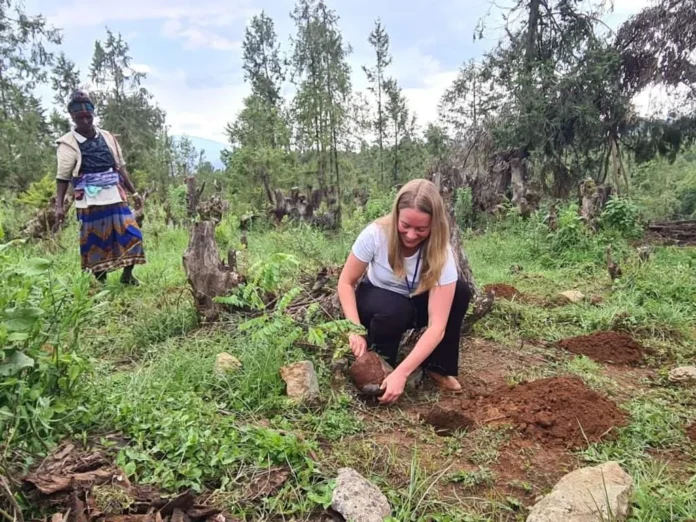
The Masterclass also emphasized the importance of bridging theory and practice. Participants had the unique opportunity to join Ethiopia’s annual Green Legacy Initiative tree-planting campaign at Gulele Botanical Gardens. This hands-on experience allowed participants to connect abstract principles of Just Transitions to tangible action.
Practical exercises like this are not merely symbolic—they reinforce how policies and projects affect people and communities on the ground. By actively engaging with NbS implementation, practitioners gain a deeper understanding of both the opportunities and challenges, ensuring that justice is not just an ideal but a guiding principle in everyday work.
Looking Ahead
The Just Transition Planning Masterclass, co-led by the Climate Investment Funds (CIF) and Climate Strategies, with support from the African Development Bank Group, showcased the value of collaborative learning and reflection. Discussions spanned ecological, social, and economic dimensions, highlighting both the challenges and opportunities in designing NbS that are truly inclusive.
As the climate crisis intensifies, the need to rethink NbS through a justice-centered lens becomes increasingly urgent. Projects that fail to consider equity risk alienating communities and undermining long-term sustainability. Conversely, NbS that are thoughtfully designed with local voices and needs in mind can be transformative, empowering communities, protecting ecosystems, and addressing structural inequalities.
The Masterclass left one thing clear: the path to climate resilience is inseparable from the path to social justice. By embedding principles of fairness, inclusion, and equity into every stage of planning, we can ensure that nature-based solutions benefit everyone—not just the majority, but the “final 2%” who too often remain unseen.