
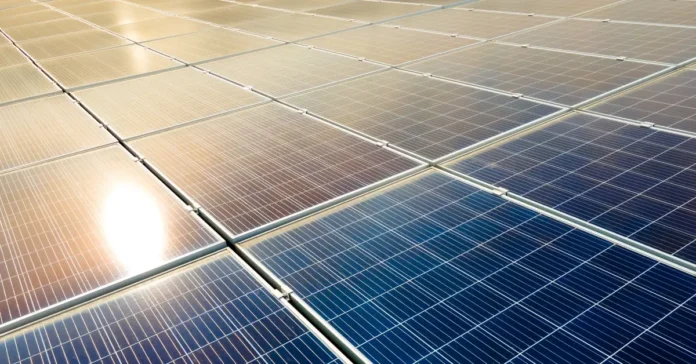
As summers grow hotter and weather patterns become less predictable, farmers around the world are searching for creative ways to protect their crops. Shade — once considered a limitation in agriculture — is now emerging as an unlikely hero. And in a twist that blends clean energy with crop resilience, solar panels are stepping into a dual role: producing renewable power while sheltering plants from extreme heat.
When Sunshine Becomes Too Much of a Good Thing
Most of us associate plant growth with abundant sunshine. But too much direct sunlight, especially during prolonged heatwaves, can stress crops, dry out soil, and reduce yields. Certain plants, including hops — the flowering cones that give beer its signature bitterness and aroma — are particularly sensitive to rising temperatures.
In southern Germany, in the town of Au in der Hallertau, a forward-thinking farmer named Josef Wimmer decided to test a new approach. Instead of viewing solar panels as competitors for valuable farmland, he saw them as partners. Working alongside the solar company Hallertauer Handelshaus, Wimmer launched a pilot project in late 2022 to grow hops beneath elevated solar arrays.
The idea is elegantly simple: the panels generate electricity for roughly 250 households, while simultaneously casting partial shade over the crops below. In an era of climate change, that filtered light may prove invaluable.
The Rise of Agrivoltaics
This blending of agriculture and solar power is part of a growing movement often called “agrivoltaics.” Rather than dedicating land exclusively to either farming or energy production, agrivoltaics aims to do both — maximizing land efficiency while addressing two pressing challenges: food security and renewable energy expansion.
In the German experiment, the shade provided by solar panels appears to moderate temperature extremes. Hops that might otherwise wilt under intense summer sun receive relief during peak heat. The panels also influence moisture retention. According to scientists overseeing the project, rainfall lingers longer in shaded soil, reducing evaporation and helping maintain healthier root systems.
Bernhard Gruber, the scientist managing the trial, has pointed out that the benefits extend beyond simple shade. Healthier plants are often less vulnerable to disease. By softening environmental stress, the panels may indirectly strengthen crop resilience — a critical advantage as extreme weather events become more frequent.
Not the First of Its Kind
While the Hallertau hops project gained widespread attention in 2023, it is far from the first attempt to pair crops with solar panels. In the United States, researchers have explored growing native plants beneath solar installations since at least 2021. One focus has been silflower, a perennial plant that could serve as a sustainable oilseed crop. By cultivating it under solar panels, scientists hope to build agricultural systems that support biodiversity while contributing to renewable energy goals.
American researchers have also been investigating how solar farms might double as pollinator habitats. By planting native grasses and wildflowers between panel rows, developers can create safe havens for bees, butterflies, and hummingbirds — species whose populations have declined sharply in recent decades. In this way, solar arrays may become more than power plants; they could function as ecological corridors.
A Balancing Act of Light and Shade
Of course, the success of agrivoltaics depends on achieving the right balance. Too much shade can hinder photosynthesis, while too little fails to protect plants from heat stress. The German hop project is designed to study precisely this equilibrium — adjusting panel spacing and height to optimize both electricity production and crop performance.
A comprehensive report on the hops experiment was expected later in 2023, aiming to clarify whether this approach can be scaled up. If successful, it could offer a blueprint for other regions facing similar climate pressures.
Across the Channel, researchers in the United Kingdom are pursuing related ideas. Instead of building entirely new solar farms, they are exploring the possibility of retrofitting panels onto existing greenhouses and polytunnels. By integrating solar technology directly into agricultural infrastructure, farmers might generate energy without sacrificing productive land.
Plant biologist Elinor Thompson and her team have begun collaborating with a fruit farm in Kent to test this concept. Their goal mirrors the German initiative: determine how solar installations can complement plant growth rather than compete with it.
Rethinking Farmland in a Warming World
These experiments signal a broader shift in how we think about land use. For decades, debates around solar farms have centered on trade-offs — energy versus agriculture, development versus conservation. Agrivoltaics reframes the conversation. Instead of asking which priority should win, it asks how both can thrive together.
The stakes are high. Climate change is already altering rainfall patterns, intensifying droughts, and pushing traditional growing regions to their limits. Hops farmers in particular have reported concerns about declining yields and changes in flavor profiles linked to temperature shifts. Since hops are essential to beer production, these changes ripple outward into brewing industries and local economies.
By offering partial shade, solar panels may help stabilize microclimates around vulnerable crops. They may also reduce irrigation demands, a crucial benefit in water-stressed regions. And at the same time, they produce clean electricity, reducing reliance on fossil fuels — the very emissions driving global warming.
A Future of Shared Solutions
The beauty of agrivoltaics lies in its practicality. It does not require radical reinvention of farming, nor does it abandon renewable energy goals. Instead, it encourages collaboration between farmers, scientists, and energy developers.
For now, projects like the one in Au in der Hallertau remain experimental. But they hint at a future where fields shimmer not only with crops but with solar panels working quietly overhead — harvesting sunlight twice, once for power and once, indirectly, for plant life.
As the climate continues to shift, such layered solutions may become less of a novelty and more of a necessity. Shade, once something farmers tried to avoid, could soon be one of their most valuable tools — especially when it comes from the very sunshine that sustains us all.