
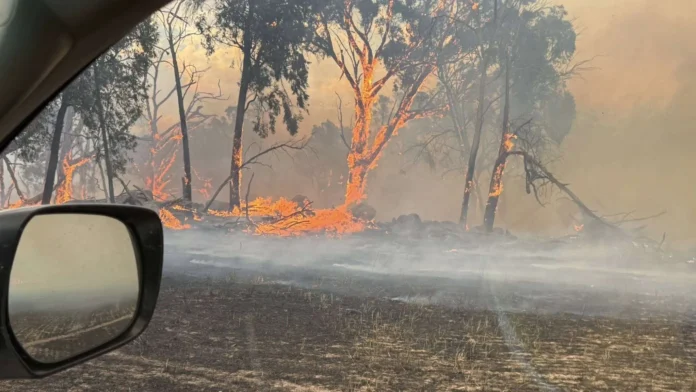
Southern Australia is enduring one of the most intense heatwaves in its history, igniting widespread bushfire threats across Victoria and New South Wales. Temperatures have soared to unprecedented levels, with Melbourne recording 43.9°C (111°F) and Sydney reaching 42.8°C (109°F). Rural towns in Victoria, such as Wudinna, Tarcoola, and Walpeup, have sweltered under 48°C-plus days, pushing communities and emergency services to their limits.
The combination of extreme heat and prolonged drought has left vegetation dry and highly flammable. Across Victoria, more than 500 structures—including 180 homes—have been impacted by bushfires, and one life was tragically lost: a cattle farmer in the Longwood area. While dozens of fires initially prompted the highest Emergency Warnings, the situation has slightly eased, with only 11 fires remaining active under the Watch and Act or lower alert levels.
Satellite imagery highlights the scale and intensity of the fires. On January 11, NASA’s Aqua satellite captured true-color images showing dozens of active fires spreading across southern Victoria and eastern New South Wales. Copernicus Sentinel-2 imagery from January 9 revealed large burn scars south of Longwood, with active fire fronts glowing bright red, starkly contrasting the blackened terrain already devastated by flames.
Transportation and daily life have been severely disrupted. The main highway linking Sydney and Melbourne remains closed in areas where fires continue to rage. With forecasts predicting catastrophic and extreme fire conditions, particularly in northern and north-central Victoria, authorities have issued grave warnings for residents, workers, and holidaymakers in the region.
Greg Murphy of the Country Fire Authority summarized the looming danger bluntly: “Our job is to help people tomorrow. We might not be able to. That’s difficult to say, but it’s real.” VicEmergency echoed the message, emphasizing that fire and weather conditions could make bushfires exceptionally hazardous, particularly during the height of summer.
Adding to the challenge, this period coincides with peak holiday season in southern Australia. Beaches, national parks, and forests are usually packed with visitors, many of whom now face closures and canceled activities. National parks within the designated Catastrophic Fire Danger zones—including the Grampians, Otways, and areas along the Murray and Goulburn Rivers—will be closed on Friday. Popular tourist routes like the Great Ocean Road are also affected, with scheduled events, holiday programs, and even train and bus services canceled in the most extreme regions.
Meteorologists forecast temperatures in Melbourne to again reach 42°C (107°F) on Friday, accompanied by strong winds. Regional areas may experience highs of 46°C (114°F). These conditions severely challenge any efforts at bushfire suppression, with thunderstorms and dry lightning likely to exacerbate the risk. The same extreme conditions are expected to extend into New South Wales through Saturday, maintaining the region under high alert.
The events underscore the continuing vulnerability of southern Australia to climate extremes. Experts warn that prolonged droughts combined with record-breaking summer heat create the perfect conditions for catastrophic fires. Communities are urged to remain vigilant, heed official warnings, and prepare for the possibility of evacuation.
For now, emergency services are focused on protecting lives and property while monitoring dozens of active fire fronts. The coming days will test both human resilience and firefighting capabilities, as southern Australia grapples with what may be one of the most dangerous fire periods in recent memory.