

Most people I talk to think low carb means keto: the butter-soaked eggs, the cheese boards, the slow dread of a restaurant menu. It doesn’t have to. There’s a middle ground — around 50 grams of carbs a day, not a single one more or less that you need — where you keep the benefits without the personality change.
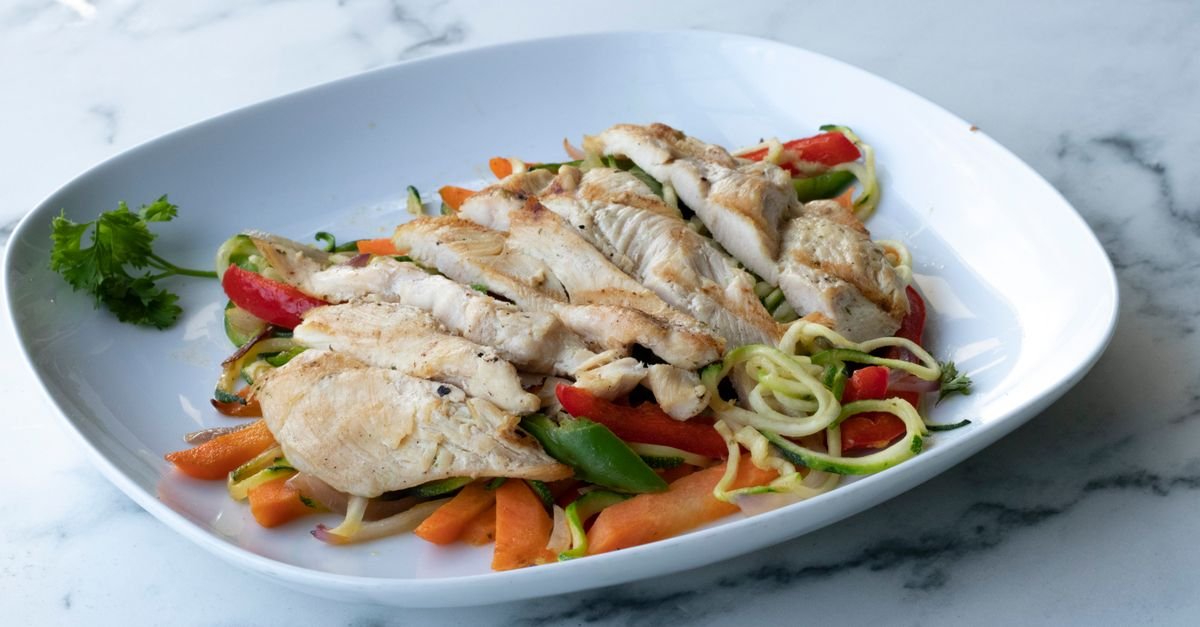
I’ve been living this way for the past year, and it’s the closest thing to a cheat code I’ve found for slow, steady weight loss without the yo-yo. I’ve almost reached my starting point again after a stretch where the scale and I were playing a long game of cat and mouse, mostly thanks to a medication I stopped 14 months ago that had been quietly adding pounds in the background.
Here’s the thing: low carb has never been a diet I’m doing to myself. It’s the one that fits. That’s the whole secret, and it’s not a secret at all — it’s just the first thing most people skip when they pick a plan.
What 50 grams a day actually looks like
My target is a rough guesstimate — around 50 grams of carbs per day. Not keto, not a number I’m defending with my life. It’s the number where the scale moves, the energy stabilizes, and I don’t feel like I’m chewing on cardboard.
And here’s the part that makes it sustainable: I’m not strict 100% of the time. I carb cycle in a loose sense — eating more on the week of my period when my body genuinely craves it, and keeping things tighter for the other three weeks. Low carb 80% of the time is the rule I can actually live with. I’ve been to Paris and eaten bread more than once and felt no guilt about it.
The research on this is honestly mixed — some work supports matching carb timing to your cycle, some doesn’t — but the practical part is simple: if you can’t hold a rule forever, pick the one you can hold most of the time. 80% beats 100% that lasts a month.
The protein rule that does most of the work
If you remember one thing from this article, make it this: pack more protein into every meal.
Here’s what I tell my clients when they’re trying to cut weight without feeling hungry all day — higher protein meals keep calories lower without hunger striking. Protein is the most satiating macronutrient we have, and when you’re eating around 50 grams of carbs, that leaves a lot of room to lean into meat, fish, eggs, dairy, and legumes that aren’t too starchy.
Balanced blood sugar is the side effect that changes everything. No sugar highs means no 3pm crash, stable moods, and the kind of energy that doesn’t require a coffee and a granola bar to unlock. I don’t just limit the really sweet fruit — I keep the rest vibrant and varied, and I eat a lot of vegetables.
Fat: don’t fear it, don’t feast on it
A lot of low-carb diets get a bad name because people interpret “cut carbs” as “load up on fat.” I don’t go for it just because I can. Cheese, full-fat yogurt, cream, real butter — all fine, all in moderation.
What I do deliberately add in is the kind of fat that keeps me full: extra virgin olive oil, avocado, a bit of organic butter on things that deserve it. Fat isn’t the star of this approach. Protein is. Fat is the supporting cast that makes the whole thing stick.
What changed for me, and what it cost
The reflux. I’ve dealt with it for years — the tightness, the chest discomfort — and it got noticeably worse after having a baby. Eating low carb with higher protein and moderate fat, combined with intermittent fasting most days (skipped during my period when my body wants different fuel), has improved my symptoms hugely.
That’s a personal result, not a clinical one. A lot of the mechanism makes sense — lower carb intake can reduce the pressure on the lower esophageal sphincter, which relaxes around the luteal phase of the cycle when progesterone is running higher — but your mileage may genuinely vary. If reflux is your reason for trying this, talk to your GP before you change anything.
The tracking part was an eye-opener. When I started dieting over a year ago, I used MyFitnessPal to log calories for a while. I don’t use it anymore, but the first few weeks showed me exactly how much I was actually eating, and overeating turns out to be a lot easier than you think when your goal is around 1500 calories a day. That number gets spent quickly, and without a system you never know where it went.
I’ve lost weight slowly and healthily over the past year. I’d like to lose another 10 pounds — the camera never forgives, and there’s still work to do — but I’m in a place I haven’t been in years. That’s not a small thing.
The Science, Simplified
The Science, Simplified: Low carb doesn’t mean keto. Around 50 grams of carbs a day, high protein, and moderate fat is a sustainable middle ground that stabilizes blood sugar, keeps you full, and supports slow weight loss. Match carb timing to your energy and cravings when it helps you hold the line, keep fat sensible rather than maximal, and use tracking for a few weeks to learn what “enough” actually looks like for you.
Try this on Monday
Pick one meal — breakfast is the easiest — and rebuild it around protein: eggs, Greek yogurt, or a protein shake instead of cereal or toast. Keep the carbs under 30 grams for that one meal. That’s it. Run it for a week and see how you feel before you change anything else.
Not medical advice — if you have reflux, a cycle-related issue, or anything your GP should know about, check with a professional before you start.


Leave a Reply