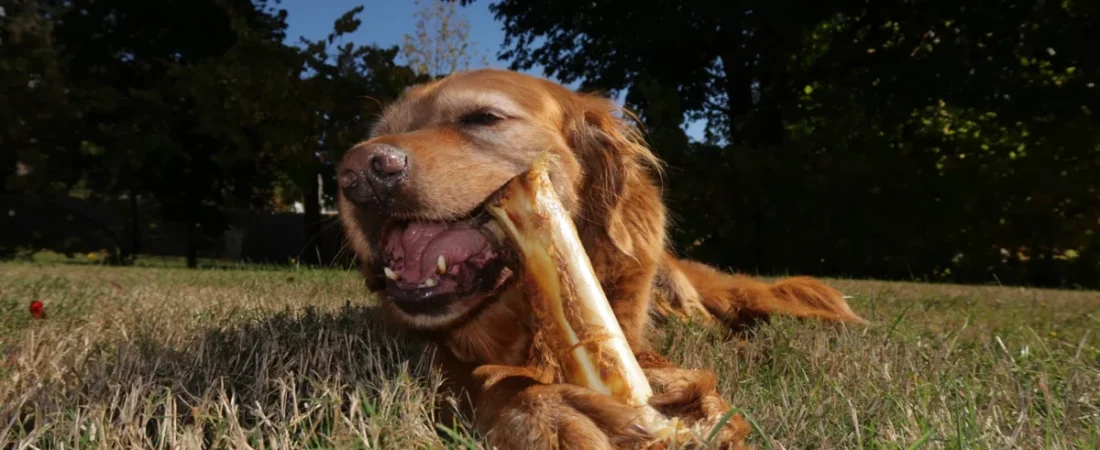
Your dog’s breath stinks. There’s tartar on the back teeth, and the nightly tooth-brushing session has become a wrestling match you’re usually losing. Sound familiar? You’re not alone — according to the AVMA, nearly 80% of dogs have gum disease by age 3, and only about 2% of owners actually brush daily. The short answer: a well-made bone given every single day is the closest thing to a real toothbrush most of us can actually stick with.
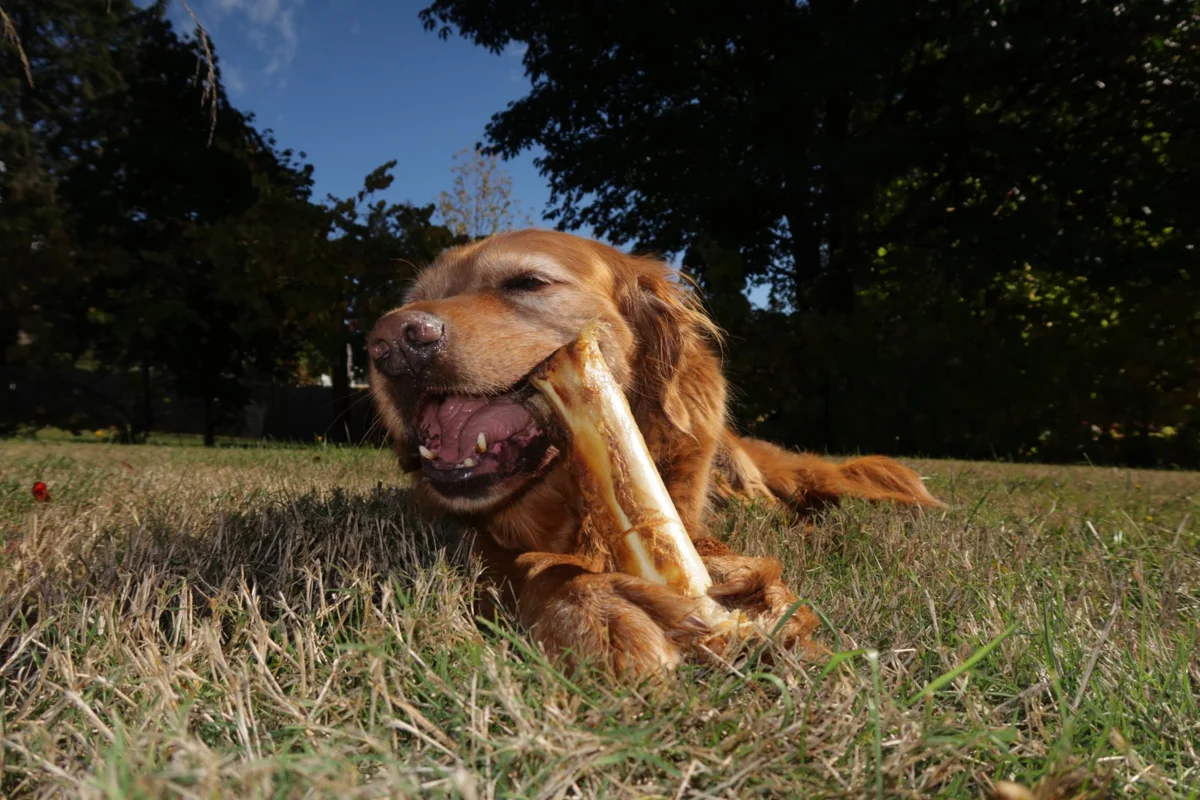
Here’s what I tell my clients: healthy mouth, healthy gut, healthy dog. We keep six dogs in the house, and these are the only bones we buy — not because they’re fancy, but because the ingredient list is literally one thing: 100% Colorado bison. Slow roasted at a very low temperature for over 40 hours, with moisture injected back in. No salt, spices, smoke, charcoal, or preservatives. Real marrow inside. They come in three sizes — 2 inches, 4 inches, and 6 to 8 inches — so you can match the bone to the mouth.
Why a bone works on teeth
Chewing a bone is a scraping job. Every pass of the jaw grinds plaque and tartar off the tooth surface the same way a toothbrush stroke does, which matters because gum disease doesn’t stay in the mouth. Bacteria can enter the bloodstream and reach the heart, liver, and kidneys, and since dogs swallow constantly, a mouth full of bad bacteria ends up in the gut.
The research on bones is genuinely encouraging. One raw bone study found a 70.6% drop in tartar after 12 days. Another found tartar down 57.7% in 5 days, and about 81% by the end of the trial. A 2020 study found tartar completely gone from the back teeth in under 3 days. Across those studies, there were no broken teeth, no mouth injuries, and no blockages. Two honest caveats: those studies used beef bones, so the scraping action transfers but the data doesn’t name bison specifically, and a bone is a habit, not a replacement for vet dental checkups or daily brushing.
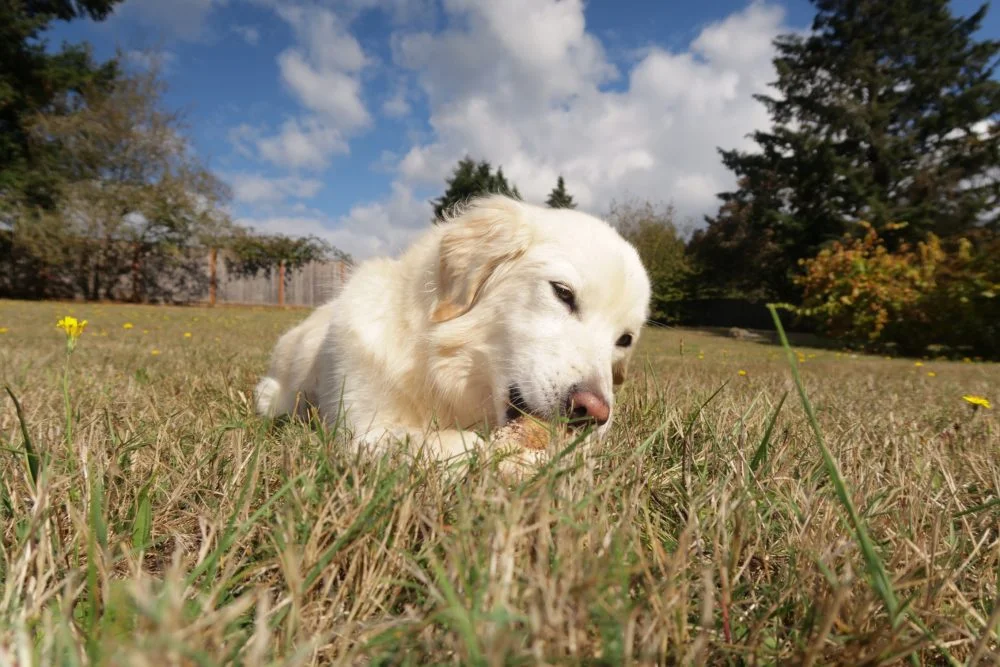
If you want to verify the big number yourself, the AVMA’s own figures are the ones most vets quote on the gum disease stat.
The one detail that separates safe bones from risky ones
The bone you choose matters more than the brand on the label. I see so many dogs fed baked bones or deer antlers — in my opinion, both are a no-go for daily feeding. In 2017, the FDA received reports of about 90 dogs getting sick from store-bought bone treats, and about 15 of them died. The problems included choking, gut blockages, mouth cuts, and splintering, and many of the bones involved were smoked or baked with seasonings and preservatives.
Think of it like a dry twig versus a green, live branch. High heat dries a bone out until it snaps into sharp pieces. Low and slow, with moisture put back in, keeps the bone flexible enough that it wears down instead of shattering. That’s exactly how these are made, and it’s the whole reason I’d rather a low-temp roast over anything pulled off a grill or out of an oven.
The bonus benefits (there are real ones)
Stress relief. Chewing calms the body’s stress system. In one study, rats that were allowed to chew during a stress period showed lower stress hormones and calmer brain activity.
Anxiety relief. Chewing activates a calming pathway in the brain’s fear center, which makes it useful for separation anxiety, storms, or crate rest. The company that makes these bones, Winnie Lou, actually created them because customers wanted something to keep their dogs busy while they were out of the house.
Nutrition. Marrow is a rich natural fat for energy, and bison is packed with protein, iron, zinc, selenium, and B12. Start with short sessions so your dog’s tummy can adjust to the extra fat.
Mental stimulation. Working out the marrow is basically a puzzle toy. A tired brain means fewer chewed-up shoes and a calmer house. Once the inside is empty, you can stuff it with pumpkin or bone broth and freeze it for round two.
How we actually use them
My dogs go insane for these — even the pickiest one. That’s convenient, because a single bone keeps them busy for hours, but we only hand one over for about 30 minutes at a time, because they’ll wear themselves out if we let them. Take the bone away after 30 minutes and put it back in the fridge. You’ll want it finished within a few days, and once the inside is licked clean, the bone has done its job — toss it.
Safety tips that keep it simple
- Pick a bone bigger than your dog’s mouth.
- Always supervise chewing sessions.
- Take the bone away once it’s small enough to swallow in one piece.
- Never give cooked bones straight off your dinner table.
- Limit sessions to about 30 minutes, then refrigerate the rest.
- Use the bone within a few days — it’s real food, and it can spoil.
- When the bone is bare, throw it away.
One boundary worth stating: a bone is a supplement to dental care, not a substitute for a vet. If you notice bleeding gums, loose teeth, or your dog flinching at chewing, see a qualified professional before continuing.
The Science, Simplified
The Science, Simplified: Chewing a real, moist bone scrapes plaque and tartar off teeth the same way brushing does, and studies on bones show tartar dropping by roughly 60–80% over one to two weeks. The 80% gum-disease stat is why the habit matters, the FDA’s 2017 report is why low-temperature roasting beats baked or smoked bones, and 30 supervised minutes a day is the entire program. You don’t need a gadget — you need a bone your dog will actually take seriously.
That’s the whole thing. Pick the size that’s bigger than your dog’s mouth, give it for 30 minutes tomorrow, and put it in the fridge for the next day. Six weeks from now, check the back teeth — that’s how you’ll know if it worked for your dog. For more options in the same one-ingredient spirit, Winnie Lou makes these in all three sizes, and if you want an extra layer on plaque, a dental powder mixed into food is a reasonable add-on.


Leave a Reply