In 2024, global investment in clean energy reached a staggering $2.1 trillion, surpassing spending on fossil fuels for the first time. This milestone signals more than just financial trends—it reflects a growing global consensus: the future of energy must be low-carbon, sustainable, and resilient. Governments, businesses, and individuals are increasingly realizing that clean energy is not only an environmental imperative but also an economic opportunity.
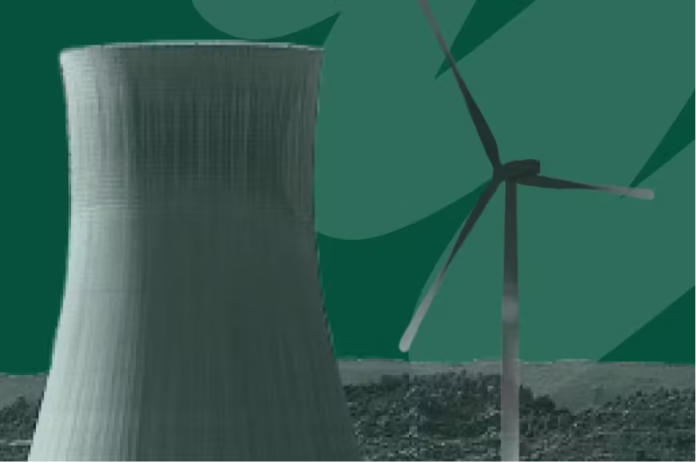
But what exactly is clean energy? While often used interchangeably with renewable energy, the term has a broader meaning. Clean energy encompasses all energy sources that produce minimal or no greenhouse gas emissions during operation, helping to mitigate climate change while securing long-term energy supply. This includes familiar technologies like solar and wind, but also nuclear power and advanced energy efficiency measures that reduce overall consumption.
“Clean energy is more than just an environmental necessity—it’s an economic force. Countries leading in clean energy development are creating millions of jobs, fostering innovation, and reducing reliance on volatile fossil fuel markets.”
In this article, we’ll explore the core sources of clean energy, the benefits of transitioning to a low-carbon future, and how countries around the world are shaping the next generation of energy systems.
What Is Clean Energy?
At its core, clean energy refers to sources that minimize environmental impact during operation. While renewable energy emphasizes natural replenishment, clean energy emphasizes low emissions. Many energy sources fall into both categories: solar, wind, and hydropower, for example, are both renewable and clean. Nuclear energy, on the other hand, is considered clean because it generates electricity without carbon emissions, but it is not renewable due to finite fuel supplies.
There is often confusion between terms like “clean,” “renewable,” and “green” energy:
| Term | Definition | Examples |
|---|---|---|
| Clean Energy | Produces little to no greenhouse gas emissions | Solar, wind, hydropower, nuclear, energy efficiency |
| Renewable Energy | Derived from naturally replenishing sources | Solar, wind, hydropower, geothermal, biomass |
| Green Energy | Renewable energy with minimal ecosystem disruption | Solar, wind, small-scale hydropower, geothermal |
For instance, biomass is renewable but can emit greenhouse gases when burned, so it is not fully clean. Large-scale hydropower, while renewable, may not always qualify as green due to ecological impacts.
Energy Efficiency: A Core Component of Clean Energy
Clean energy is not just about production—it’s also about smarter consumption. Energy efficiency reduces the amount of energy needed for the same outcome, cutting waste and emissions. The International Energy Agency (IEA) estimates that improved efficiency could achieve 40% of the emissions reductions needed to meet the Paris Agreement goals.
Practical examples include:
- Building upgrades: Insulation and smart heating systems reduce unnecessary energy use.
- Lighting: LED bulbs use up to 90% less electricity than traditional incandescent bulbs.
- Industrial optimization: Advanced manufacturing techniques reduce energy consumption and emissions.
While solar farms and wind turbines capture headlines, energy efficiency often delivers the fastest, most cost-effective emissions reductions.
Key Sources of Clean Energy
Clean energy comes in many forms, each with its own advantages and limitations.
1. Solar Energy
Photovoltaic (PV) panels convert sunlight into electricity, while Concentrated Solar Power (CSP) uses mirrors to produce steam that drives turbines. Solar energy is the fastest-growing source of electricity, with global installed capacity surpassing 2 terawatts (TW) in 2024. Its benefits include zero emissions and declining costs, but challenges such as intermittency, land use, and storage needs remain.
2. Wind Energy
Wind turbines, located onshore or offshore, harness wind to generate electricity. Offshore wind is highly efficient, particularly in Europe. Wind energy is cost-effective and scalable but faces obstacles like variable output, wildlife impacts, and local opposition.
3. Hydropower
The world’s largest renewable electricity source, hydropower uses flowing water to generate energy. It provides reliable, flexible power but can disrupt ecosystems, displace communities, and face drought-related vulnerabilities.
4. Geothermal Energy
By tapping heat from beneath the Earth’s surface, geothermal plants provide consistent electricity with minimal emissions. However, its expansion is geographically limited and requires significant upfront investment.
5. Nuclear Energy
Nuclear fission generates large amounts of continuous, low-carbon power. Small modular reactors (SMRs) promise more flexible deployment, but high costs, waste management, and safety concerns persist.
6. Emerging Technologies
- Green Hydrogen: Electrolyzing water using renewable electricity produces zero-emission hydrogen for industry, transport, and storage.
- Energy Storage: Advanced batteries and pumped hydro systems stabilize grids and store excess renewable power.
Benefits of Clean Energy
Transitioning to clean energy offers far-reaching benefits:
- Environmental Protection: By replacing fossil fuels, clean energy reduces greenhouse gas emissions, air pollution, and water usage, helping prevent climate-related health issues.
- Economic Growth: Global renewable energy jobs surpassed 16.2 million in 2024, with solar PV accounting for 7.2 million. Investment in clean energy drives innovation and economic resilience.
- Energy Security: Reliance on wind, solar, and other abundant resources mitigates exposure to volatile fossil fuel markets, as highlighted during the 2022 energy crisis.
- Technological Innovation: Advances in smart grids, storage, and emerging fuels like hydrogen enable more resilient and versatile energy systems.
Global Leaders in Clean Energy
- United Kingdom: A world leader in offshore wind, with 14.7 GW installed and a 50 GW target by 2030, alongside new nuclear projects.
- United States: Despite federal policy rollbacks, state initiatives and private investment continue to expand solar and wind capacity.
- European Union: Aims for net-zero by 2050, with strong growth in solar, wind, and green hydrogen infrastructure.
- China: The largest clean energy investor globally, adding 277 GW of solar and 80 GW of wind capacity in 2024, while leading in EV and battery production.
Challenges Ahead
Barriers to clean energy adoption include policy uncertainty, grid and storage limitations, material shortages, land use conflicts, and financing gaps. Overcoming these challenges will require coordinated global action, innovative technologies, and new investment models.
The Road Ahead
The trajectory of clean energy is clear: solar and wind will continue to dominate, energy storage and smart grids will expand, and emerging technologies like hydrogen and small modular reactors will unlock new opportunities. With the right policies and investments, the transition to a low-carbon energy system is not just possible—it’s accelerating. Clean energy is shaping the future of power, offering a path toward environmental sustainability, economic growth, and global resilience.